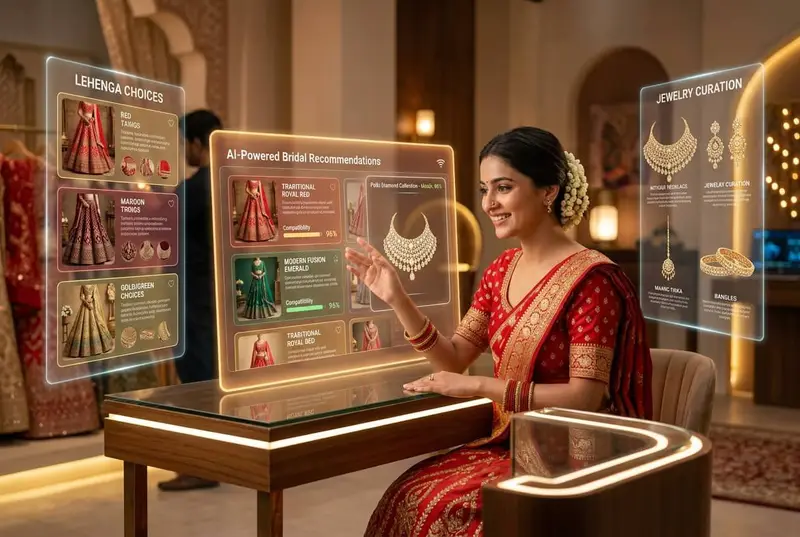
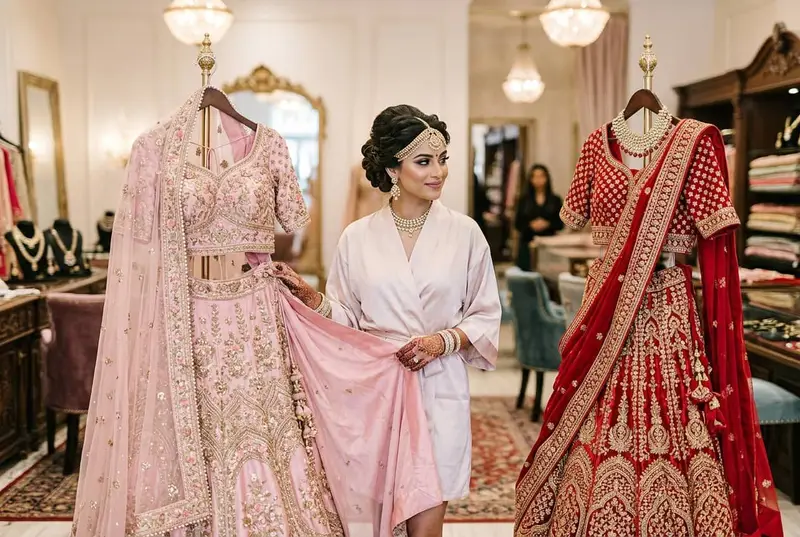
A wedding stylist in India curates the full wedding look across every function - bridal, groom, and family outfits - working across designers, boutiques, and markets rather than making clothes themselves. The role sits upstream of shopping: a stylist decides the direction (colours, silhouettes, sequencing across ceremonies), while a personal shopper focuses on sourcing and buying the actual pieces once that direction is clear.
Key Takeaways
- A stylist's job is curation and sequencing across all wedding functions, not just picking one outfit.
- The role is distinct from a personal shopper, who focuses on sourcing and purchasing once the direction is set.
- Good bridal styling accounts for skin tone, body proportions, venue, and ceremony type - not just current trends.
- Hiring 3-6 months ahead gives a stylist time to plan properly; NRI families should start earlier.
- Cultural and regional expertise matters, since Hindu, Muslim, Sikh, and South Indian ceremonies each carry different dress codes.
What Is a Wedding Stylist in India?
A wedding stylist is a fashion professional who curates your entire wedding look - from the first engagement outfit to the final reception ensemble. Unlike a designer who creates clothes, a stylist works across designers, boutiques, and markets to put together a cohesive, personalised look that suits your body type, skin tone, cultural traditions, and preferences.
Think of a wedding stylist as your fashion project manager - someone who ensures every outfit, accessory, and detail is planned and sequenced properly across the wedding calendar, rather than decided outfit-by-outfit under time pressure.
Wedding Stylist vs. Wedding Personal Shopper
Many people use these terms interchangeably, but the roles are distinct:
Wedding Stylist
- Focus: Complete look curation - outfit, jewellery, hair and makeup direction, dupatta draping
- Scope: End-to-end fashion planning across all ceremonies
- Approach: Creative and strategic - builds a visual identity for the wedding
- Involvement: Typically starts months before the wedding
Wedding Personal Shopper
- Focus: Sourcing and purchasing outfits from specific markets and designers
- Scope: Hands-on shopping assistance once direction is set
- Approach: Execution-oriented - knows where to find and buy specific pieces
- Involvement: Concentrated around shopping days
Many clients start with styling consultations and bring in personal shopper support once they're ready to buy. See our detailed explainer on what a wedding personal shopper does if you're deciding between the two.
What Services Does a Wedding Stylist Cover?
1. Bridal Styling
This is the core service. A bridal stylist helps choose the right lehenga, saree, or gown for every ceremony - from haldi and mehendi to the pheras and reception - accounting for skin tone, venue, ceremony type, and personal style.
Not sure which lehenga colour suits you, or how to style your saree for the wedding day? This is where bridal styling earns its place.
2. Groom Styling
The groom's look matters just as much. A stylist helps the groom go beyond the basic sherwani - considering bandhgala jackets, Indo-western suits, textured kurtas, and accessories. Our groom styling service aims to complement the bride's look without clashing.
3. Family Outfit Coordination
An often underrated part of the job. A stylist coordinates outfits for the extended family - parents, siblings, in-laws - aiming for a cohesive palette without making everyone look identical. Our family wedding styling service handles this with attention to who's photographed together and when.
4. Ceremony-Specific Styling
Indian weddings run across multiple events, each with its own dress code. A stylist plans looks for mehendi, sangeet, haldi and reception separately rather than treating the wardrobe as one outfit repeated. Our wedding functions styling service covers this sequencing.
5. Cultural & Regional Expertise
India's wedding traditions vary considerably by community. A stylist familiar with Hindu wedding outfits, Sikh wedding attire, Muslim wedding fashion, and South Indian bridal sarees can flag customs a family might otherwise miss. Our cultural styling service covers these regional traditions.
6. Jewellery & Accessory Guidance
Should you buy or rent your wedding jewellery? How do you pair a polki set with a heavily embroidered lehenga? A stylist advises on jewellery selection, dupatta draping styles, footwear, and the groom's pagdi or safa.
7. Destination Wedding Planning
For couples having a destination wedding in Udaipur, Goa, or elsewhere, a stylist helps with packing, fabric choices suited to the climate, and outfit logistics. See our destination wedding packing guide for specifics.
When Should You Hire a Wedding Stylist?
Ideally 3-6 months before the wedding. This gives your stylist time to understand your vision, research designers and markets, accompany you on shopping trips (or manage them virtually), and coordinate fittings and alterations across every ceremony.
If you're an NRI planning a wedding from abroad, start earlier still - ideally 9 months out. Our NRI wedding shopping service is built specifically for families coordinating from overseas.
Who Actually Benefits From This
- Busy professionals who don't have time for multiple shopping trips
- Couples overwhelmed by the sheer number of designer and market options
- NRI families who need someone coordinating things on the ground in India
- Couples wanting a coordinated look across all ceremonies and family members
- Anyone who wants their wedding wardrobe planned as a sequence rather than a series of separate, last-minute decisions
How the Process Typically Runs
- Consultation - understanding your vision, budget range, and cultural requirements
- Style plan - a curated set of outfit recommendations with mood boards, mapped to each function
- Shopping - either in-person accompaniment or coordinated remotely through shopping assistance
- Fittings and coordination - reviewing fit, sequencing alterations, and confirming family outfits
- Wedding week - final checks so nothing is left to chance on the day itself
Browse our complete range of wedding styling services or explore our guide to bridal lehenga colours if you're still shaping your overall vision before booking a consultation.
For examples of the decisions a stylist works through with couples, see our guides on saree vs lehenga and where to shop for wedding outfits in India.