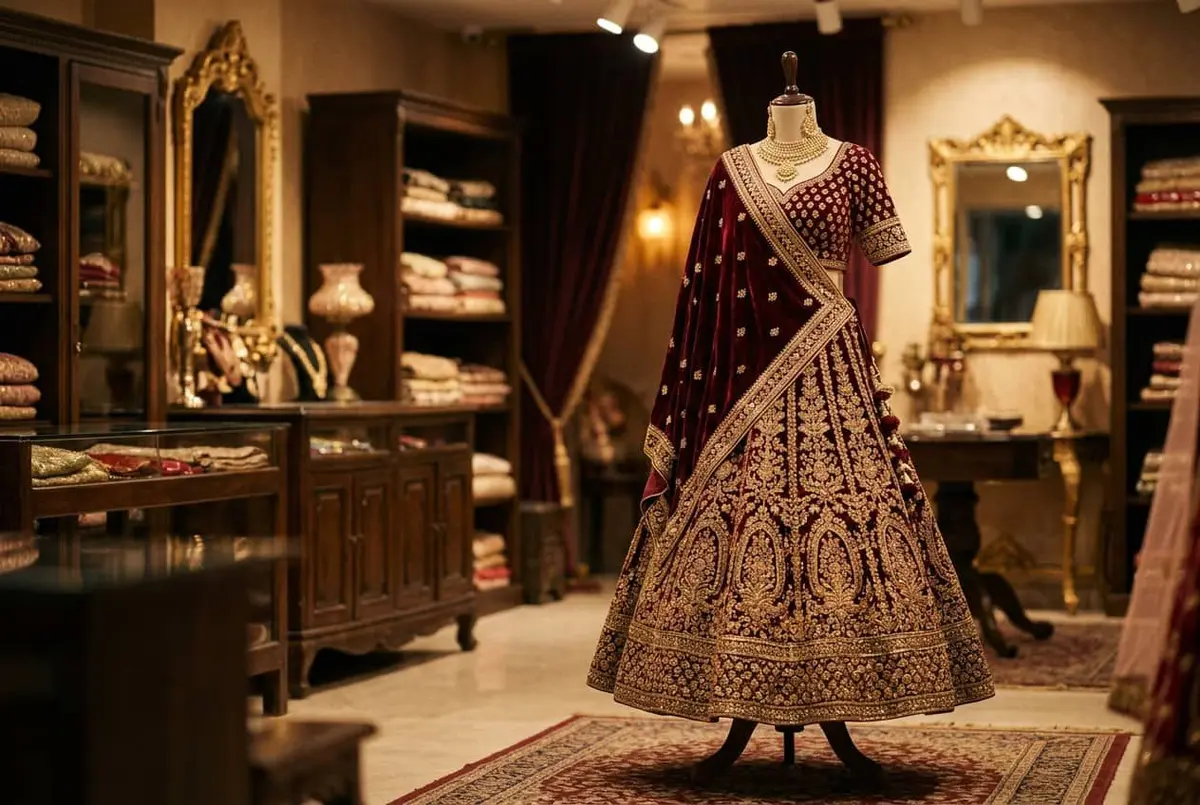
Cultural Wedding Styling for Indian Wedding Traditions
Colour, drape, fabric and jewellery conventions differ by tradition and even by ceremony. We style to what your specific wedding calls for - never a generic bridal template.
- Tradition-Specific, Not Generic
- Ceremony-by-Ceremony Planning
- Interfaith Weddings Handled
What Cultural Styling Covers
Every tradition sets its own rules for what to wear, when. We work within those rules instead of around them.
Colour & Occasion
What's auspicious, expected or best avoided for your ceremony.
Drape & Silhouette
The correct technique for your saree, lehenga or drape style.
Jewellery Convention
The jewellery family that actually pairs with your outfit and region.
Family Expectations
Heirloom pieces, colours to avoid, and dress codes confirmed upfront.
Browse Styling Guidance by Tradition
Open a tradition for outfit, drape and jewellery guidance specific to that community.
Hindu Wedding
Colour, drape and jewellery conventions across Pheras ceremonies.
See styling guideMuslim Wedding
Outfit and modesty guidance for Nikah and Walima.
See styling guideSikh Wedding
Anand Karaj styling, turban colour matching and chooda.
See styling guideChristian Wedding
Gown, veil and church-appropriate coverage.
See styling guideSouth Indian Wedding
Kanjeevaram drape and temple jewellery pairing.
See styling guideBengali Wedding
Benarasi, mukut and shakha-pola conventions.
See styling guidePunjabi Wedding
Anand Karaj outfits, phulkari and turban styling.
See styling guideGujarati Wedding
Panetar, Gharchola and the seedha pallu drape.
See styling guideRajasthani Wedding
Bandhani, gota patti and royal-leaning silhouettes.
See styling guideTamil Wedding
Kanjeevaram silk, temple jewellery and Nivi drape.
See styling guideJain Wedding
Lighter, community-appropriate colour palettes.
See styling guideParsi Wedding
Gara sarees and pastel wedding palettes.
See styling guideBridal & Groom Conventions at a Glance
| Tradition | Typical bridal outfit | Typical groom outfit | Key styling consideration |
|---|---|---|---|
| Hindu (North Indian) | Red or auspicious-coloured lehenga or saree | Sherwani or dhoti-kurta | Kundan/polki jewellery layering, dupatta drape for Pheras |
| Tamil / South Indian | Kanjeevaram silk saree | Silk veshti (dhoti) with angavastram | Temple jewellery pairing, Nivi-style drape |
| Muslim (Nikah/Walima) | Sharara, gharara or Anarkali | Sherwani or Pathani suit | Modest coverage, dupatta or hijab draping |
| Sikh (Anand Karaj) | Red/pink lehenga with chooda and kalire | Sherwani with coordinated turban (pagri) | Turban-to-outfit colour matching |
| Christian | White or ivory gown or saree | Suit or bandhgala | Veil selection, church-appropriate coverage |
| Bengali | Red Benarasi saree with mukut | Dhoti with topor (headgear) | Shakha-pola bangles, aanchal drape |
| Gujarati | Panetar and Gharchola saree | Kediyu or sherwani | Seedha pallu drape, bandhani accents |
Tradition Detail, Family by Family
Open any section for ceremony sequence, colour, drape, fabric and jewellery detail.
North Indian Hindu Weddings
Red and gold are considered auspicious for the core Pheras ceremony, usually in a heavily worked lehenga or Banarasi saree. Kundan and polki jewellery, set with uncut stones in gold foil, is the conventional pairing rather than temple jewellery.
A Haldi outfit prioritises washable, lighter fabric; the reception is where couples often choose a more contemporary look. See Hindu wedding styling and Rajasthani wedding styling for regional variation.
South Indian & Tamil Weddings
A Kanjeevaram silk saree from Tamil Nadu, draped in the Nivi style with the pallu over the left shoulder, is central to Tamil and much of South Indian bridal wear. Temple jewellery - gold-toned pieces with deity or peacock motifs - is the conventional pairing rather than kundan or polki.
Bengali Weddings
A Bengali bride traditionally wears a red Benarasi saree with a mukut (headgear), with the aanchal draped distinctively and often with a key bunch. Shakha-pola (conch shell and coral bangles) mark marital status and are specific to this tradition.
Gujarati Weddings
Gujarati brides wear the Panetar and Gharchola saree with a seedha pallu draped over the right shoulder, rather than the left-shoulder Nivi style used elsewhere. Bandhani accents and Kediyu for the groom are common regional markers.
Punjabi & Sikh Weddings (Anand Karaj)
A dupatta is draped over the head for the Anand Karaj, and the bride adds a chooda (red and white bangles) and kalire. Phulkari embroidery from Punjab shows up across several functions. The groom's turban (pagri) is matched to the overall outfit colour.
Muslim Weddings (Nikah & Walima)
A sharara, gharara or Anarkali is typical for the Nikah, often with a dupatta or hijab draped for modest coverage. White and ivory are common choices, though this varies by family. Sherwanis or Pathani suits are conventional for the groom.
Christian Weddings
White or ivory is customary for a Christian wedding, typically a gown or saree with a veil for the bride and a suit or bandhgala for the groom. Neckline and coverage expectations are usually set by the specific church or family rather than by one universal rule.
Jain & Parsi Weddings
Jain and Parsi wedding palettes tend to run lighter and more pastel than the red-and-gold convention common elsewhere. A Parsi bride may wear a Gara saree with its distinctive embroidery.
Interfaith & Cross-Regional Weddings
When a couple's families follow different traditions, or a wedding spans two ceremonies - for example a Hindu wedding and a separate church service - we plan each ceremony on its own terms rather than blending unrelated conventions into a single outfit.
Each ceremony gets an outfit, drape and jewellery plan appropriate to that tradition, coordinated in palette so the overall wedding wardrobe still feels considered as a whole.
Family Expectations & Head Covering
Families often have specific expectations - a colour to avoid (such as black or plain white at certain Hindu ceremonies), a piece that must be worn (a family heirloom saree, or the groom's family turban), or modesty requirements around neckline and sleeve length.
We confirm these directly with each family rather than assume, so the final outfit satisfies personal taste and family tradition together.
How We Tailor the Support
Tell us your wedding dates, cities, functions and who needs help. We'll recommend the right combination of styling, shopping and coordination support for your wedding.
Every wedding is different. We first understand your wedding, who needs support, the number of functions, location and the type of styling or shopping help required. Our team then recommends the right level of support and discusses the commercial details with you directly.
Plan My Wedding Looks