The sherwani is not compulsory for an Indian groom anymore. Bandhgalas, cape kurtas, Indo-western suits, and elevated plain kurtas all work as sherwani alternatives, and the right choice depends on the ceremony, the season, and how much movement the day demands. This guide compares traditional and modern options and shows where each one earns its place in the wardrobe.
Key Takeaways
- A bandhgala, Indo-western suit, or well-tailored kurta can each substitute for a sherwani depending on the ceremony's formality.
- Cape kurtas and Indo-western suits suit sangeet and reception better than seated ceremonies like the pheras.
- Traditional and modern looks aren't opposites - many grooms land somewhere on the spectrum between the two.
- Fabric weight should follow the season: velvet and raw silk for winter, linen-cotton blends for summer daytime functions.
- Book fittings early - structured jackets need more fitting rounds than a standard kurta-pajama.
The Bandhgala Jacket
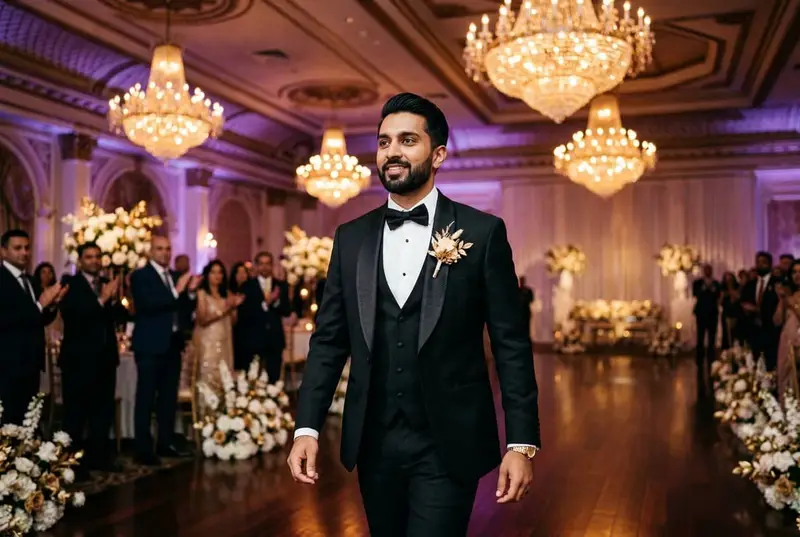
Think of it as the Indian tuxedo - structured, closed-collar, and one of the few groom pieces that photographs equally well at the mandap or seated at dinner.
- When to wear it: Engagement, reception, or any cocktail-style event
- Fabric choices: Velvet for winter weddings, linen-cotton blends for summer daytime functions, raw silk for the main ceremony
- Styling: Pair with slim tailored trousers and a pocket square; skip the tie since the nehru collar is already the statement piece
> Stylist tip: If you're choosing a bandhgala over a sherwani, ask your tailor for an internal waistcoat-style lining rather than a plain lining. It holds the chest and shoulders in shape through hours of standing and greeting guests, which a soft-lined jacket won't do.
The Indo-Western Suit
This hybrid works well for fusion or destination weddings, where the guest list is mixed and you want something that reads "Indian wedding" without a full traditional outfit.
- Key elements: A Western-cut jacket finished with Indian embroidery on the collar or cuffs, or a kurta worn with tailored Western trousers instead of a pajama
- Where it works: Beach and hill-station weddings, mixed-faith ceremonies, receptions with a Western dinner format
- Fitting note: Because the jacket follows Western tailoring standards rather than the looser draping of a sherwani, order it earlier - shoulder and armhole adjustments take longer than for a traditional kurta
The Cape Kurta
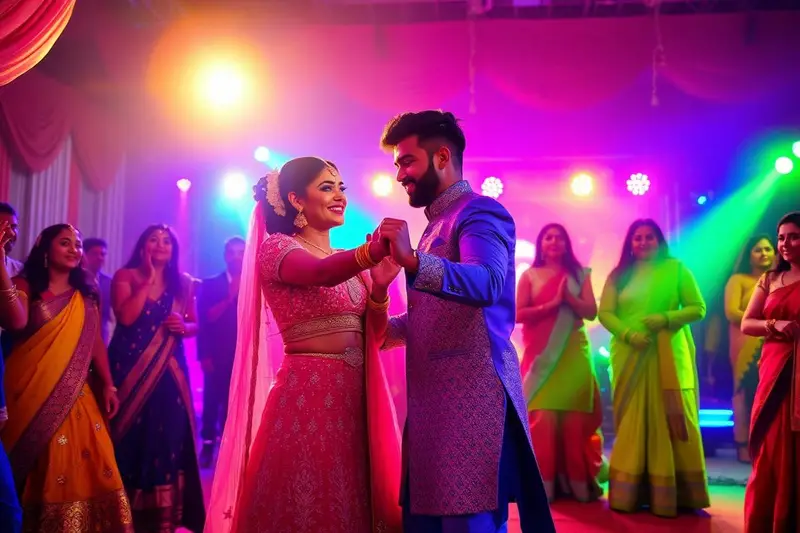
Dramatic and photograph-friendly, this is a sangeet or reception piece rather than a ceremony one, since a flowing cape is impractical for seated rituals like the phera or the nikah.
- How it works: A full-length or cropped cape layered over a plain kurta
- The one rule: keep everything underneath minimal - a heavily embroidered kurta under a heavily embroidered cape competes with itself in photographs
- Movement check: do a walk-through and a seated test before the day, since some capes bunch up awkwardly when sitting for photos or dinner
The Classic Kurta, Elevated
Sometimes simplicity wins, especially for grooms who feel overdressed in anything with heavy embellishment. A well-tailored kurta in a good fabric, with small details done right, can read as more considered than an outfit covered in embroidery.
- Details that matter: quality buttons, a touch of thread or zari work at the collar and cuff only, and a fit that sits close through the shoulders without pulling
- Fabric: chanderi silk, tussar silk, or a heavier mul cotton for daytime functions
- When it's the better choice: outdoor daytime ceremonies in warm weather, where a heavy jacket or cape would be uncomfortable by mid-morning
Traditional vs Modern: Finding Your Balance
Few grooms sit at either extreme - many blend heritage with personal style. Here's how the two ends of the spectrum compare.
| Aspect | Traditional groom | Modern groom |
|---|---|---|
| Signature piece | Full-length sherwani, heavy embroidery | Bandhgala or tailored suit |
| Headwear | Ornate turban with kalgi and sehra | Styled hair, or a minimal turban |
| Accessories | Haar, dupatta, mojri juttis, sword (in some communities) | Watch, pocket square, boutonniere |
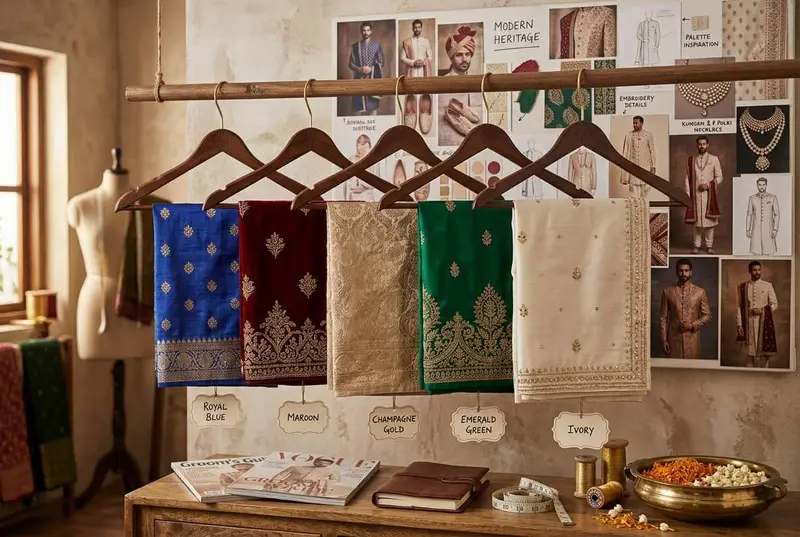
| Colours | Red, maroon, ivory, gold | Charcoal, navy, sage green, all-black |
| Works best for | Pheras, nikah, Anand Karaj; conservative or palatial settings | Reception, cocktail events, destination weddings |
A popular middle path is "traditional silhouette, modern details" - a classic sherwani shape in a contemporary colour with minimal embroidery and no turban - or a function-based split: fully traditional for the ceremony, fully modern for the reception, and fusion or experimental pieces for mehendi and sangeet.
Footwear & Accessories
- Juttis/mojaris: Hand-embroidered pairs hold their shape better than machine-embroidered versions and are worth the extra cost for the main ceremony
- Brogues or loafers: A cleaner option for Indo-western looks at the reception
- Safa/pagdi: Even with a non-traditional outfit, a styled turban adds weight to the look for the main ceremony
- Watch: Usually the only accessory a groom needs once the pagdi or safa is on
- Pocket square and brooch: Small additions that lift a plain bandhgala or suit - a brooch pinned near the collar works better on structured fabrics than soft ones
Colour by Ceremony
| Ceremony | Suggested tones | Fabric weight |
|---|---|---|
| Haldi | White or pastel yellow | Light cotton |
| Main ceremony | Ivory, gold, maroon, or a shade complementing the bride | Silk, raw silk |
| Sangeet | Jewel tones, prints, even florals | Mid-weight, breathable |
| Reception | Navy, emerald, charcoal, black | Structured suiting fabric |
Fitting Timeline
Grooms tend to under-plan fittings compared to brides, which is worth correcting since heavier fabrics like velvet and raw silk behave differently after the first alteration.
- First fitting - at order stage, for base measurements
- Second fitting - three to four weeks later, once embroidery or lining is added, to check shoulder and chest movement
- Final fitting - one to two weeks before the wedding, wearing the actual footwear for the day, since juttis change posture and hemline slightly compared to regular shoes
For the full ceremony-by-ceremony wardrobe plan and a suggested shopping timeline, see our guide to groom outfit planning.
Not sure what suits your build and the season you're marrying in? Our groom styling service and personal shopper support include fitting coordination across cities - book a consultation to get started.