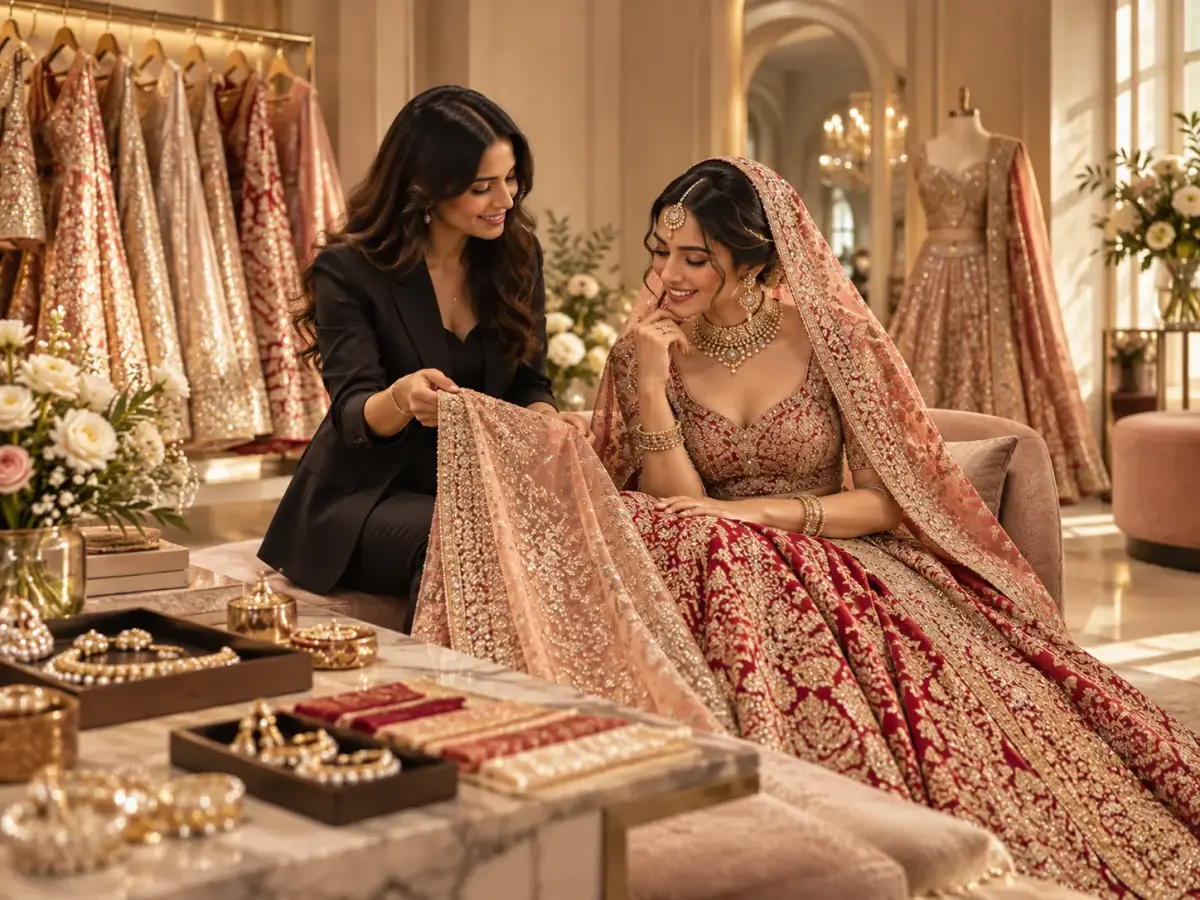
Bridal stylist helping an Indian bride compare lehenga fabric and jewellery in a bridal boutique

    Bridal Stylist in India for Your Complete Wedding Look

    We plan your outfit, jewellery, hair and makeup direction, footwear and drape as one connected wardrobe across every function - not five separate purchases decided at the last minute.

    • Every Function Planned
    • One Cohesive Palette
    • Fittings Tracked to Your Date
    Who needs styling support?

    Takes about 30 seconds. We'll confirm the next steps on WhatsApp.

    Written and reviewed by the StyleBuddy Weddings styling teamLast updated

    The Complete Look

    What Bridal Styling Covers

    Outfit & Silhouette

    Chosen around how you feel and move in it, and each function's mood.

    Jewellery Layering

    Planned by function so the ceremony set isn't repeated at every event.

    Hair & Makeup Briefing

    Neckline, dupatta weight and jewellery shared with your artist in advance.

    Footwear & Accessories

    Decided before the final fitting, since heel height changes how the outfit sits.

    Dupatta & Drape Styling

    Guided by your community's customs and rehearsed before the day.

    Trials & Fittings

    Fitting rounds tracked against your wedding date, not squeezed into the last week.

    In their own words

    A StyleBuddy client on deciding with confidence

    Her own words, unedited, after a shopping day with a stylist.


    Two dresses found, with confidence they were the right ones.

    Read exact transcript

    I have to say, it has been a wonderful day with StyleBuddy. I found my two dresses which I wanted to go for, and all the way to the meeting today, including the shopping services, have been great—wonderful. We've been successful, and I'm confident that I have the right dresses. Thank you for everything.


    Guided to the colour that suited her skin tone.

    Read exact transcript

    This store has a wide range of collections, and I really felt very happy with the service. Deepika, as a stylist, guided me on which colour would actually suit my skin tone and helped me pick the final one. She helped me out with different pieces and never got tired of showing me everything here. I am really happy and confident. Thank you.

    Function by Function

    Your Wardrobe, Ceremony by Ceremony

    Engagement / Roka

    Sets the palette tone; usually a lighter lehenga, saree or Indo-western piece with statement jewellery.

    Haldi

    Cotton, mulmul or georgette in yellow or pastel - stain-resistant, breathable, minimal jewellery.

    Mehendi

    Breathable fabric with sleeves that give the artist access to your hands; jewellery kept minimal until hands are done.

    Sangeet

    Fitted, lighter-weight outfit built for dancing, with the dupatta pinned or draped so it won't slip.

    Wedding Ceremony

    Your heaviest outfit and longest stretch of wear - fabric, drape and jewellery follow community custom.

    Reception

    A more contemporary look distinct from the ceremony outfit, built for evening light and photographs.

    From First Call to Wedding Week

    1. 1

      First Call

      Your functions, dates, cities and family customs.

    2. 2

      Wardrobe Plan

      Palette, silhouette and outfit direction for every function.

    3. 3

      Shopping & Sourcing

      Shortlists for outfits, jewellery and accessories.

    4. 4

      Trials & Fittings

      Fit checked against your actual footwear and jewellery.

    5. 5

      Wedding Week

      Looks confirmed and briefed to your hair and makeup artist.

    Outfit Guidance at a Glance

    Comparison of bridal outfit choices across wedding functions
    FunctionTypical OutfitFabric & Comfort PriorityAccessory Focus
    HaldiLight co-ord set or sunshine-yellow kurta/lehengaCotton, mulmul or georgetteFloral jewellery or minimal gold
    MehendiPrinted or embroidered anarkali, lighter lehengaGeorgette, chanderi or organzaStatement earrings, layered bangles
    SangeetStructured lehenga, indo-western gown or shararaFabric that allows movementWaist belt, dupatta pinned to skirt
    Wedding CeremonyHeavier bridal lehenga, saree or regional outfitSilk, raw silk, velvet or brocadeFull jewellery set, drape per family custom
    ReceptionGown, contemporary lehenga or lighter sareeSequinned, tulle or lighter silkStatement jewellery distinct from ceremony set

    Everything You May Want to Know About Bridal Styling

    Open any section for the detail.

    Silhouette & Fit Guidance

    We don't work to fixed body-shape rules - the outfit that photographs well on someone else may simply not feel right on you. In a trial we look at how each cut actually behaves: an A-line lehenga skirt tends to be the easiest to move in, a mermaid or fishtail cut looks striking but is worth testing for sitting and walking through a long ceremony, and a saree drape depends on pinning practice and a petticoat fitted at the right waist height.

    Blouse fit matters as much as the skirt or drape, and we usually decide it alongside your jewellery rather than separately - a collar-style necklace, a longer layered piece and heavy bangles each read differently against a given neckline and sleeve length. Which combination we suggest comes from seeing the pieces on you, not from a universal chart.

    Colour Palette Across Functions

    Treat your wedding wardrobe as one palette with five or six expressions rather than unrelated colour choices. Pick two or three base tones - for instance an ivory-gold base with a deep jewel accent - and let each function lean on a different combination. This keeps photographs cohesive and simplifies jewellery planning, since pieces in a consistent metal tone work across multiple outfits.

    Colour is judged against your own skin rather than a rule about undertones. We hold fabric swatches beside you in daylight and under the lighting your venue will actually use, and keep what genuinely lifts your face - which is often not the shade a trend list would have suggested.

    Lehenga vs Saree vs Gown vs Regional Outfits

    A lehenga gives the most structure and is generally easiest to move and dance in for sangeet-style functions. A saree - Kanjivaram, Banarasi, Paithani or another regional weave depending on your community - carries deep tradition but needs a practised drape and pins that will hold for hours; test the drape with your actual blouse and petticoat before the day.

    A gown or Indo-western piece suits receptions or cocktail-style functions well but is uncommon for the core wedding ceremony in most Indian traditions. Many brides also wear a regional outfit specific to their community - a Kerala kasavu-inspired set, a Bengali red-and-white saree, a Punjabi salwar suit for smaller functions - planned alongside, not as an afterthought to, the main lehenga or saree.

    Jewellery, Footwear & Accessories as a System

    Jewellery is planned function by function rather than one heavy set worn everywhere, but what goes where depends on your pieces, your family's heirlooms and how long you'll be wearing them. Many brides keep the weightiest set - polki, kundan or temple, depending on tradition - for the ceremony and something lighter for haldi and mehendi; we'll suggest a sequence once we've seen what you own and what you're buying.

    Footwear needs to be decided before the final fitting, not after, since heel height changes blouse fall, drape length and how a heavy lehenga skirt sits at the ankle - bring the actual pair to your fitting. Accessories such as potli bags, maang tikka, nose ring and waist belt should be chosen to work with the neckline and drape rather than added at the last minute; a waist belt, for example, needs a lehenga waistband cut to sit correctly under it.
    Dupatta & Drape Styling by Region

    Drape style is often community-specific - a Gujarati-style dupatta pinned at both shoulders, a Bengali saree drape with the pallu brought over the head, a South Indian mundu-style half-saree drape - and should be decided with family input, not just aesthetic preference.

    Drape length depends on your height and hairstyle: a longer dupatta trailing behind works for photographs but needs an attendant or pin plan for the ceremony itself; a shorter, pinned drape is more practical if you'll be moving between rituals without assistance. Guidance is usually planned in advance so your hair and makeup artist or a family member can replicate it on the day.

    Coordinating With Your Hair & Makeup Artist

    Bridal styling here means coordination, not hands-on hair and makeup application. Once your outfit's neckline, dupatta weight and jewellery plan are set, share them with your hair and makeup artist ahead of time so the hairstyle can support the jewellery - a heavy maang tikka needs a specific parting; a high neckline pairs better with hair worn up - and the makeup intensity matches the outfit's formality across functions.

    Agreeing on a getting-ready timeline with the artist also avoids delays on the day, and flags anything that affects their work in advance rather than during the sitting.

    Trials, Fittings & Timelines

    A workable sequence: shortlist outfits and colours first, finalise jewellery direction next (since it affects blouse neckline and drape), then book fittings once fabric and embellishment decisions are locked. Budget at least two fittings for any custom or heavily embellished outfit - one for initial fit and a second closer to the date for final alterations.

    Bring your actual blouse or inner layer, correct-heel-height footwear, shapewear, and neckline-adjacent jewellery to every fitting past the first, since these all change how the outfit sits. Jewellery and accessories should be finalised at least 3 weeks before the final fitting.

    NRI & Multi-City Bridal Shopping

    The core styling decisions - silhouette, palette, draping, jewellery - stay the same for an NRI bride. The difference is logistics: consultations scheduled around time zones, a compressed in-person shopping and fitting window during an India visit, and shipping or courier planning for outfits and jewellery bought remotely.

    If your outfits, jewellery and accessories are being sourced from different cities, trips are sequenced so fittings and stone-setting appointments don't clash, and we flag which pieces need to be finalised first because of longer production time.

    Start outfit shortlisting 4-6 months out for custom or heavily embellished pieces.

    How We Tailor Your Bridal Styling Support

    Every wedding is different. Tell us your functions, dates, cities and who needs support. We'll recommend the right combination of wardrobe planning, shopping, styling and coordination for your wedding.

    Every wedding is different. We first understand your wedding, who needs support, the number of functions, location and the type of styling or shopping help required. Our team then recommends the right level of support and discusses the commercial details with you directly.

    Plan My Bridal Wardrobe

    Common Questions

    Bridal Styling FAQs

    How early should I start planning my bridal wardrobe?

    Start shortlisting outfits 4-6 months before the wedding if you're commissioning designer pieces or heavy custom embroidery, since production and at least two fittings take time. If you're buying largely off-the-rack or lightly customised pieces, 8-10 weeks is workable.

    Should I wear the same outfit colour across functions?

    No. Plan a palette, not a single colour - each function has a different mood and lighting. Pick 2-3 base tones that work together and vary which one leads at each function, so your photographs stay cohesive without repeating one exact shade five times.

    Lehenga, saree or gown - how do I decide?

    This depends on your comfort with draping, your community's customs, and how much movement each function needs. A lehenga suits dancing at sangeet; a saree needs a practised drape that holds through a long ceremony; a gown suits receptions but is less traditional for the main ceremony in most communities. Many brides mix formats across functions.

    What should I bring to my final fitting?

    Bring the exact blouse or inner layer you'll wear, the footwear at the heel height you'll actually wear, your shapewear, and the jewellery pieces that sit near the neckline or waist - heel height alone can shift where a heavy lehenga skirt breaks at the ankle.

    How many jewellery sets do I need for a multi-function wedding?

    Most brides need distinct jewellery per function rather than one heavy set worn throughout. Lighter pieces work for haldi and mehendi, the heaviest set is usually kept for the main ceremony, and reception jewellery can be more contemporary.

    Do you also handle hair and makeup on the wedding day?

    We don't provide hair and makeup ourselves - we coordinate with the artist you've booked, sharing your outfit's neckline, dupatta weight and jewellery plan in advance so the look comes together consistently across functions.
    Plan My Bridal Wardrobe