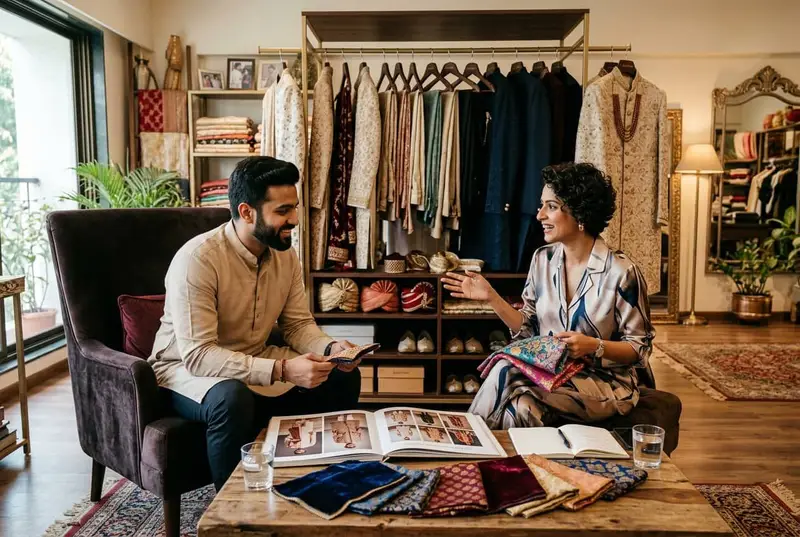
Groom outfit planning means mapping outfits, fittings, and accessories across every wedding function well before the season gets busy. A typical Indian wedding runs four to seven events, each needing a different silhouette, so a groom stylist usually recommends starting three to four months out with a ceremony-by-ceremony wardrobe plan rather than shopping event by event as dates approach.
Key Takeaways
- Plan outfits by ceremony first, then shop - haldi, mehendi, sangeet, wedding, and reception each have different fabric and formality needs.
- Start three to four months ahead; embroidered sherwanis and bandhgalas need multiple fitting rounds.
- Comfort and mobility matter as much as formality, especially for sangeet and haldi.
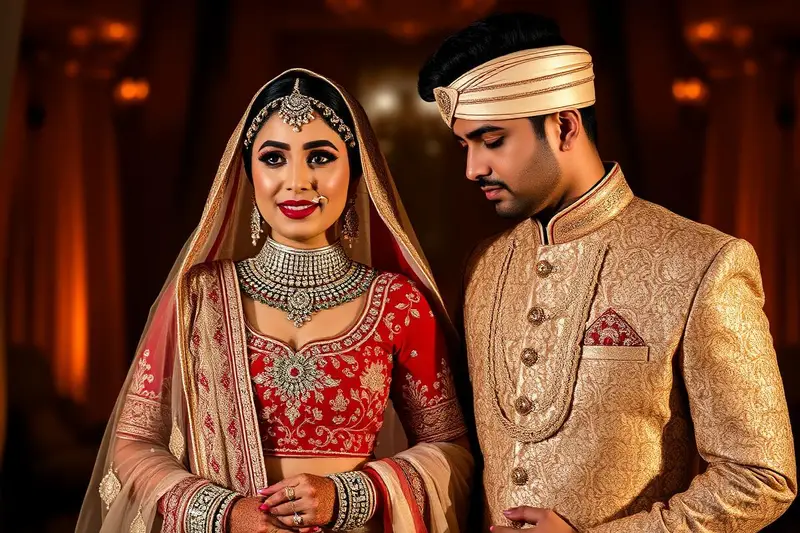
- Coordinate with the bride's palette without matching outfits exactly.
- A groom stylist can manage fittings, accessories, and city-wise shopping so the whole wardrobe comes together on schedule.
Why Groom Outfit Planning Matters
Without a plan, it's easy to repeat the same silhouette across events, clash with the bride's looks in photographs, or discover too late that a custom sherwani needed six weeks of tailoring you didn't budget for. Our groom styling service works through this with grooms function by function so every look earns its place in the wardrobe. Colour is usually the first decision to settle - our guide to groom outfit colours by function works through it.
> Stylist tip: Begin groom outfit planning at least three months before the wedding. Custom sherwanis and bandhgalas typically need four to six weeks for tailoring alone, plus time for a second fitting once embroidery is added.
Ceremony-by-Ceremony Groom Outfit Ideas
Haldi
The haldi is informal and messy by design, so the outfit should be comfortable and easy to replace if stained.
- Simple white or pastel-yellow kurta with cotton pajama or dhoti
- Printed half-sleeve kurta for a relaxed, photogenic option
- Kolhapuri chappals rather than anything precious
- Keep fabric affordable - turmeric stains are part of the ritual, not a mishap to avoid at all costs
Mehendi
More styled than haldi but still semi-formal, the mehendi is a good place to try colour and print.
- Printed nehru jacket over a contrasting kurta - teal with ivory, mustard with white, or olive with cream all work well in cotton silk or linen
- Embroidered short kurta with dhoti pants for a fusion, photograph-friendly look
- Bundi (waistcoat) over a linen kurta for structure without the weight of a full jacket
- Bold colours are encouraged here - white and heavy embroidery tend to look out of place
Sangeet
The sangeet is a performance night, so mobility should shape the outfit choice as much as formality.
- Embroidered bandhgala jacket with fitted trousers - the most dance-friendly, camera-ready option, in silk blend or velvet for winter dates
- Indo-western kurta with a cape or asymmetric layer for fashion-forward grooms who can carry a bolder silhouette
- Short metallic sherwani for evening sangeets under stage lighting
- Avoid floor-length, stiff sherwanis here - they restrict movement on the dance floor
- Coordinate loosely with groomsmen outfits for group photographs
Wedding Ceremony
This is the outfit most groom outfit planning conversations centre on, and rightly so - it carries the most cultural weight.
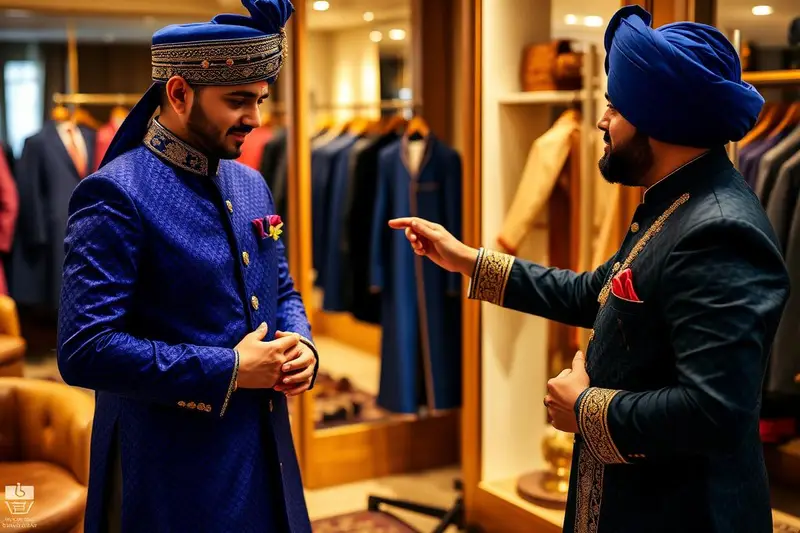
- Sherwani for traditional Hindu, Sikh, and Muslim ceremonies
- Achkan with dupatta for a refined North Indian look
- Dhoti-sherwani combination, increasingly popular for South Indian and Bengali weddings
- Three-piece suit for Christian or contemporary ceremonies
- Safa or turban, sehra, and mojri juttis coordinated with the bride's palette - complementary rather than identical
Our shopping assistance team can guide this stage through trusted stores and designers in whichever city you're shopping.
Reception
The reception is the sleekest, most contemporary look of the week.
- Tailored suit or tuxedo in black, navy, or midnight blue
- Indo-western bandhgala suit blending Indian sensibility with Western tailoring
- Designer jodhpuri suit for a regal but less traditional option
- Invest in tailoring here more than anywhere else - fit carries a reception look
Groom Outfit Planning Timeline
| Timeframe | What to do |
|---|---|
| 4-5 months before | Book a styling consultation; finalise the look for each function |
| 3-4 months before | Begin shopping for the wedding-day sherwani or suit and the reception outfit |
| 2-3 months before | Shop for haldi, mehendi, and sangeet outfits |
| 1 month before | Final fittings across all outfits; source remaining accessories |
| 1 week before | Trial run of each complete look, including footwear and accessories |
Common Groom Outfit Planning Mistakes
- Starting too late - designers and tailors book up; three to four months of lead time protects against this.
- Ignoring body type - not every groom suits a heavily structured sherwani; silhouette should follow build, not trend alone.
- Forgetting accessories - a watch, footwear, and pocket square finish a look that otherwise reads unfinished.
- Skipping coordination with the bride - our couple coordination styling helps avoid clashing palettes in photographs.
- Leaving grooming to the last minute - a haircut five to seven days before and a beard trim on the day both belong in the plan.
Groom Outfit Planning for Different Wedding Types
Destination Weddings
Breathable fabrics travel and photograph better - linen sherwanis for Goa, lighter silks for Kerala, structured pieces for Udaipur's palace settings. Our destination wedding styling team plans around venue and climate together.
NRI Grooms
Virtual groom outfit planning sessions work well here, with live video shopping tours of Indian markets arranged through our NRI wedding shopping service.
Cultural Weddings
Every tradition carries its own groom requirements, and our cultural styling team helps keep these authentic while still reflecting personal taste.
Looking for style alternatives beyond the classic sherwani, or reception-specific ideas? Our companion guide on groom styling beyond the sherwani covers silhouettes and fabric choices in more depth.