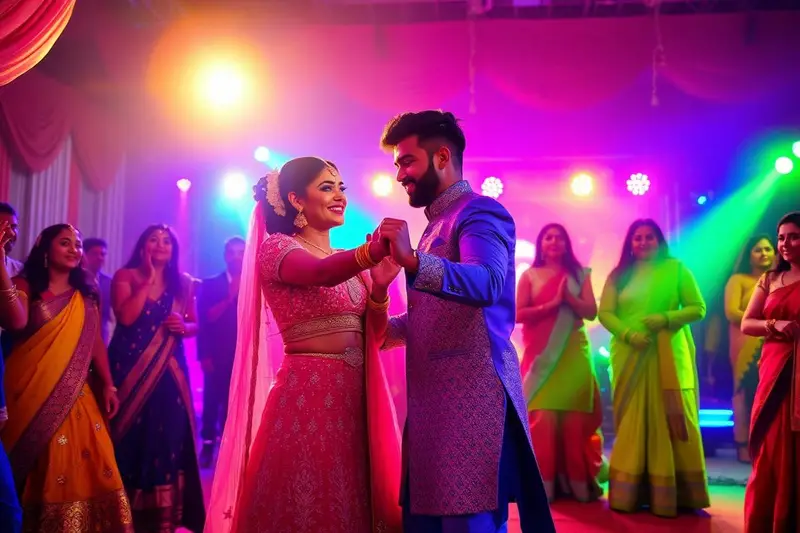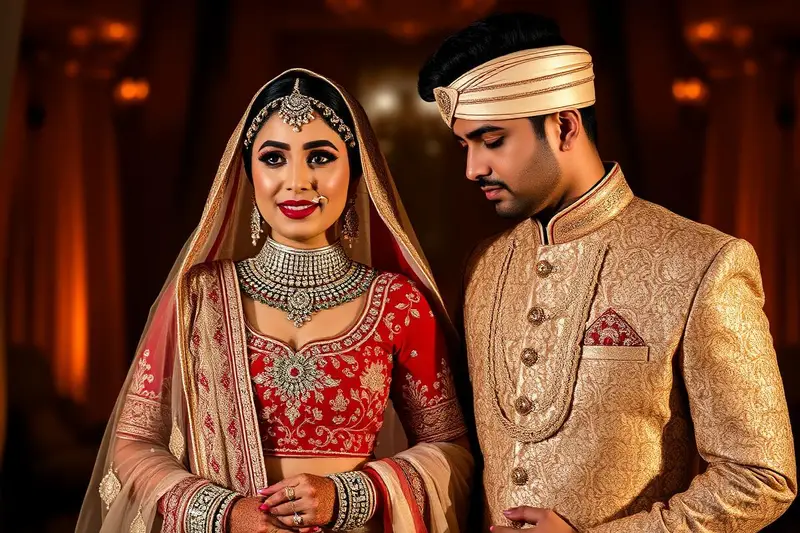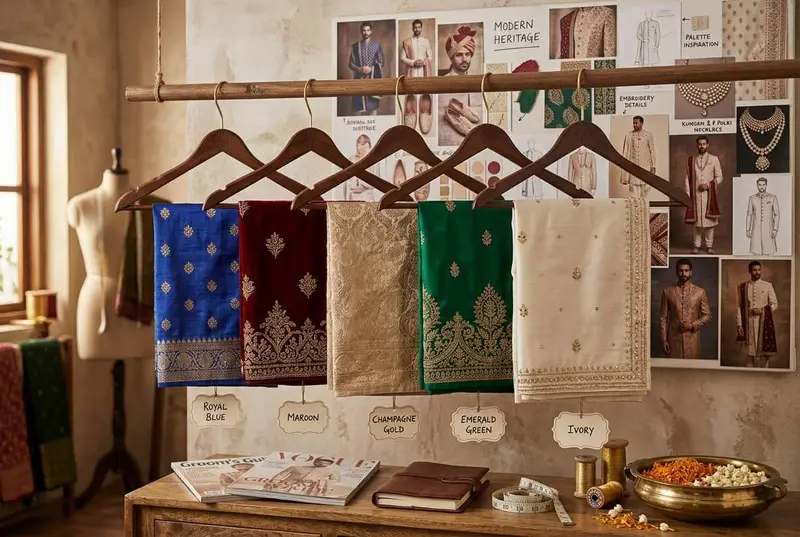
Pick groom outfit colours by function rather than by a single favourite shade. Ivory, gold, beige and pastels suit daytime ceremonies; deeper tones such as maroon, bottle green, navy and black work for evening functions and receptions. Coordinate with the bride by sharing a palette - one shared accent colour usually reads better in photographs than matching outfits.
Key Takeaways
- Time of day and venue lighting matter more than trend.
- Daytime functions suit lighter, warmer tones; evenings carry deeper shades well.
- Coordinate with the bride through a shared accent, not an identical colour.
- Judge fabric colour in daylight, not under shop lighting.
- Some families expect specific colours for the ceremony; ask before shopping.
Colours by Function
| Function | Colours that usually work | Notes |
|---|---|---|
| Roka / engagement | Ivory, powder blue, sage, beige | Lighter than the main ceremony |
| Mehendi | Yellow, mint, coral, off-white | Prints work well in daylight |
| Sangeet | Wine, teal, charcoal, metallic accents | Structured jackets photograph well under stage light |
| Main ceremony, daytime | Ivory, cream, gold, blush | Warm tones hold up in bright sun |
| Main ceremony, evening | Maroon, bottle green, deep blue | Reads richer under warm lighting |
| Reception | Navy, black, midnight blue, deep grey | Tailoring matters more than colour here |
How Colour Behaves in Photographs
Shop lighting is usually warm and forgiving. Take the fabric to a window or step outside before deciding, particularly for pastels and ivory, which shift noticeably between daylight and artificial light. For evening functions, remember that most Indian wedding venues use warm lighting, which lifts reds and golds and can flatten cooler greys.
Coordinating With the Bride
Rather than matching, agree a palette. A common approach our stylists use is to take one colour from the bride's outfit into the groom's stole, brooch or pocket square, and keep the main garments in different but compatible tones. Our couple coordination guide works through this function by function.
Family and Community Expectations
Colour is one of the few wedding wardrobe decisions with real cultural weight. In some families a specific colour is expected for the ceremony, some avoid particular shades, and many leave it entirely to the couple. Ask early - it is easier than reworking an order.
Skin Tone, Honestly
Colour advice tied to skin tone is often stated far too rigidly. What our stylists actually do is hold two or three shades against the face in daylight and look at which one keeps the face looking bright rather than washed out. Undertone matters more than depth, and the answer differs between fabrics with the same nominal colour.
Fabric Changes the Colour
The same maroon reads differently in raw silk, velvet and jacquard, because texture changes how light is reflected. Velvet deepens colour; silk brightens it; matte fabrics mute it. Always compare shades in the fabric you intend to buy.
Our groom sherwani guide covers fabric and silhouette, and groom styling beyond the sherwani covers Indo-western and reception options.
Planning the Full Set
Across a multi-function wedding, the useful test is whether the five or six outfits look like a considered set rather than five separate purchases. Our groom styling service builds that palette across functions, and wedding shopping assistance sources within it.
Want your groom outfits planned as one palette? Plan My Groom Wardrobe.