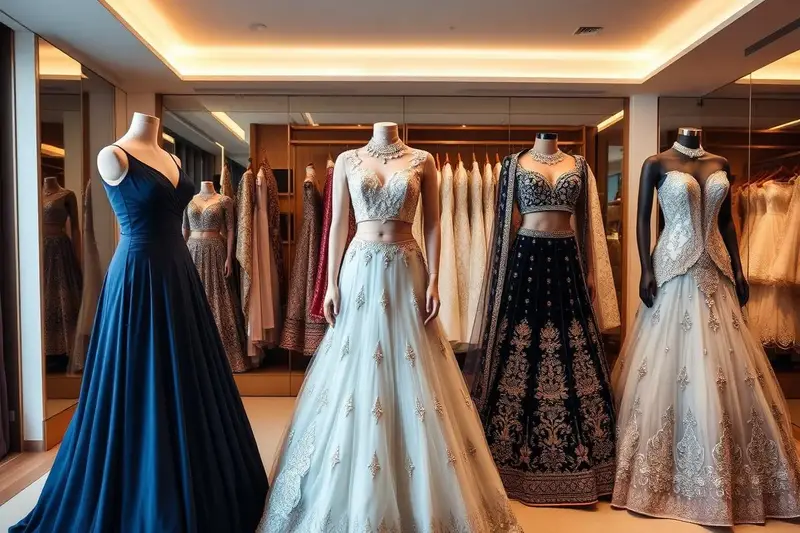
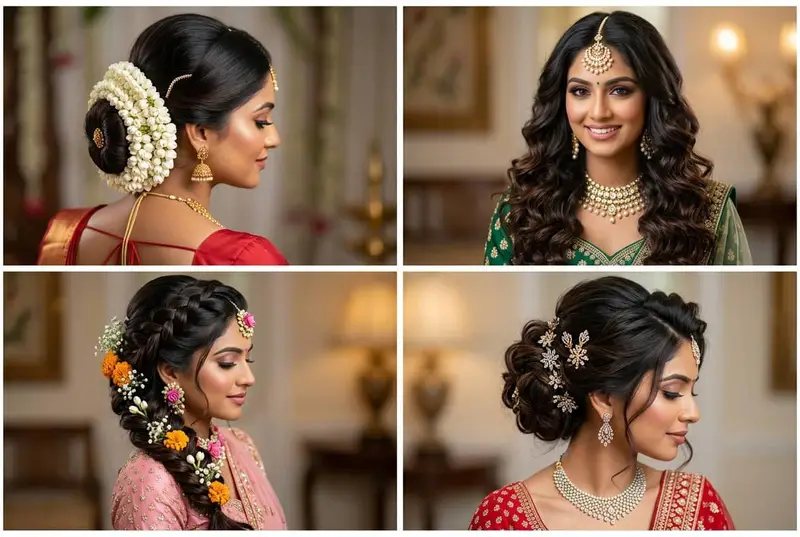
Choose a lehenga if you want a structured silhouette, easier movement and a look that photographs with volume. Choose a saree if your family's ceremony traditionally uses one, if you want a heirloom weave, or if you prefer a drape that can be restyled and reworn. Many brides use both across a multi-day wedding - a saree for the ceremony and a lehenga for the reception, or the reverse.
Key Takeaways
- Neither is more traditional in general; tradition here is community-specific.
- A lehenga is usually easier to walk and dance in; a saree is easier to rewear afterwards.
- Sarees are generally faster to buy off the shelf; custom lehengas need the longest lead time.
- Both can be light or heavy - weight depends on fabric and embroidery, not the garment type.
- Deciding early matters because jewellery, blouse and hair all follow from it.
Side-by-Side Comparison
| Factor | Saree | Lehenga |
|---|---|---|
| Silhouette | Follows the body, drape-led | Structured, fuller skirt |
| Ease of movement | Needs practice; pins help | Generally easier for dancing |
| Getting ready | 30-45 minutes to drape | Faster to put on |
| Reuse after the wedding | High - can be restyled and reworn | Lower, though the blouse and dupatta can be reused |
| Ceremony expectations | Traditional in many South Indian, Bengali, Maharashtrian and Parsi weddings | Common in North Indian ceremonies and receptions |
| Shopping lead time | Ready weaves available; custom handloom takes longer | Custom pieces need the longest lead time and fittings |
| Alteration flexibility | Blouse and petticoat only | Skirt length, waist and blouse all adjustable |
Which Suits Your Ceremony?
Start with what the ceremony expects. In many South Indian, Bengali and Maharashtrian weddings the ceremony saree is the tradition, sometimes in a specific weave or drape. In many North Indian weddings the lehenga is the usual ceremony outfit, with sarees appearing at receptions and family functions. Plenty of families are relaxed either way - the point is to ask rather than assume, particularly where a specific heirloom or gifted garment is involved.
Comfort and Practicality
Ask yourself three questions: How long will you be in the outfit? Will you be sitting on the floor for rituals? Will you be dancing? A heavy Kanjivaram is beautiful and heavy; a fully worked bridal lehenga can weigh as much or more. Weight sits differently - a saree carries it on the shoulder and waist, a lehenga on the hips. Trying both for at least fifteen minutes is more informative than any general rule.
Body Type: Guidance, Not Rules
Structured lehengas with a fitted waist create a defined silhouette; softer fabrics such as georgette drape closer to the body. Rather than following universal body-shape rules, our stylists usually shortlist a few silhouettes, try them, and let the trial decide. What suits you is the one you can move confidently in.
> Stylist tip: If you cannot decide, try the shortlist in the order you will wear them - ceremony outfit first, when you are freshest. Fatigue during a long trial day skews the decision.
Using Both Across the Wedding
A common approach: saree for the ceremony where tradition calls for it, lehenga for the reception or sangeet where movement matters. Another: a lehenga for the main day and the family's heirloom saree for a smaller ritual, which keeps the heirloom in the wedding without the weight of a full day.
Getting to a Decision
If you are choosing, our guides on how to style a saree for the wedding day and bridal lehenga colour choices cover the next step for each option, and bridal dupatta draping styles covers the drape either way. Our bridal styling team runs this as a shortlist-and-trial process rather than a debate, and wedding shopping assistance covers the shopping once the direction is set. For how silhouette and proportion interact, see choosing a lehenga that suits your proportions, and for the main day itself, wedding ceremony outfits for bride and groom.
Still torn between the two? Plan My Bridal Wardrobe and we'll shortlist both with your ceremony in mind.