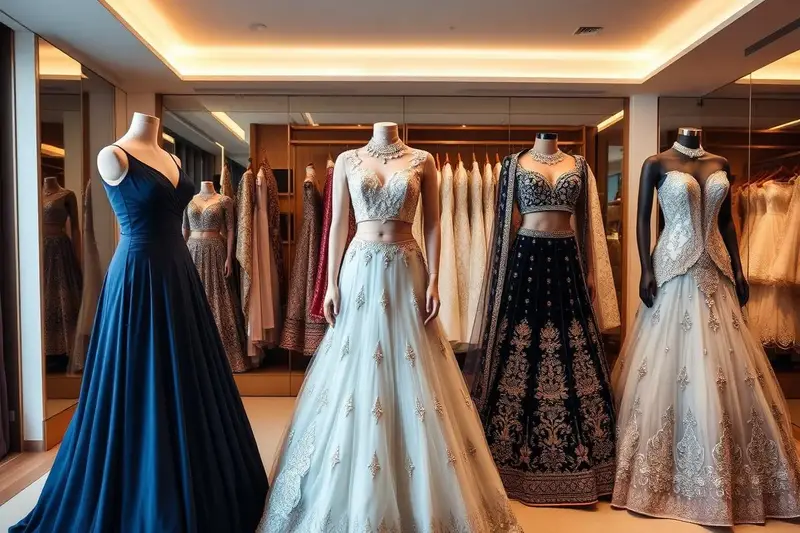
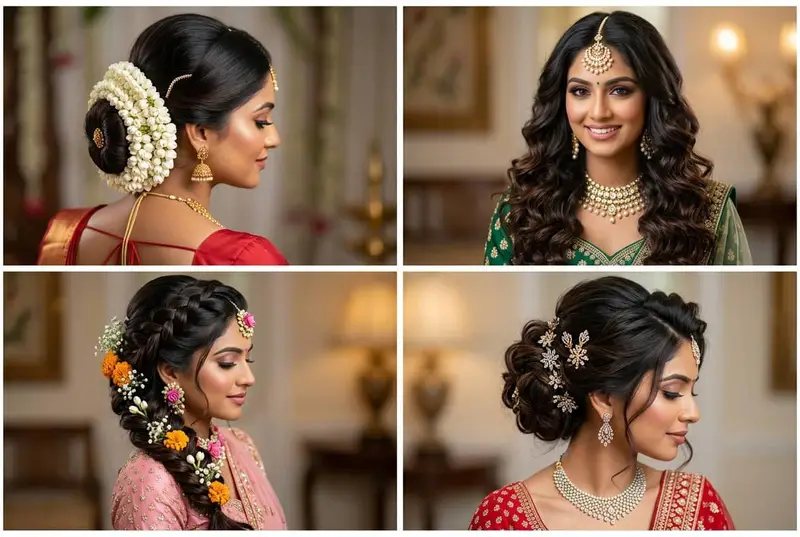
Match jewellery to the lehenga's metal tone and embroidery weight rather than to its colour alone. Gold-toned polki or kundan suits red, maroon and gold-worked lehengas; uncut diamond, silver-toned or pearl sets suit pastels and ivory; temple jewellery pairs with South Indian silks. Keep one statement piece dominant - usually the necklace - and let everything else support it.
Key Takeaways
- The embroidery's metal thread (gold or silver zari) is the strongest clue to which jewellery tone will look intentional.
- Heavy lehenga work calls for lighter jewellery, and vice versa; both being heavy competes in photographs.
- Choose the necklace length against the blouse neckline before buying anything else.
- Polki, kundan, temple, meenakari and jadau are different crafts, not synonyms.
- Try the full set with the actual blouse - not a substitute top - at the final fitting.
Which Jewellery Suits Which Lehenga Colour?
| Lehenga | Jewellery that usually works | Avoid |
|---|---|---|
| Classic red or maroon | Gold-toned polki, kundan, jadau; ruby accents | Heavy silver-toned sets, which can look disconnected |
| Pastel (blush, mint, powder blue) | Uncut diamond, pearl, light kundan, silver-toned | Very heavy gold sets that overwhelm soft fabric |
| Bottle green or emerald | Gold with emerald or polki; temple for South Indian silks | Green-on-green stone sets that flatten in photos |
| Ivory, champagne, gold | Pearl, diamond, subtle polki | Bright coloured meenakari, which fights the neutral |
| Deep wine or plum | Antique gold, oxidised finishes, polki | Bright yellow-gold high-shine sets |
| Kanjeevaram or South Indian silk | Temple jewellery, gold coin sets, kasu malai | Contemporary diamond sets, which sit oddly against the weave |
What Is the Difference Between Polki, Kundan and Jadau?
- Polki uses uncut, unfoiled natural diamonds set in gold - it has a soft, uneven sparkle.
- Kundan is a setting technique in which stones (often glass or semi-precious) are set with refined gold foil.
- Jadau refers to the traditional craft of embedding stones into softened gold, generally associated with Rajasthani workshops and Mughal-era design influence.
- Meenakari is enamel work, usually on the reverse of a piece, so a necklace can be worn either way.
- Temple jewellery is a South Indian tradition using motifs drawn from temple art and deities; pieces are commonly made in gold or in gold-plated silver.
Knowing the difference matters commercially: two necklaces that look similar can be priced very differently depending on the craft and the stones. Ask what is being sold before comparing prices, and get the details in writing on the invoice.
How Do You Layer Without Overloading?
A practical framework our stylists use:
- Pick the hero. Usually the necklace - or the maang tikka if the neckline is high.
- Support it. Earrings that echo the hero's stone but sit smaller.
- Balance the head. If the necklace is a heavy choker plus a long rani haar, keep the tikka slim.
- Finish the hands. Kaleere, chooda or bangles as the tradition requires; a haath phool only if the sleeves are simple.
- Stop. If you are unsure whether a piece is one too many, it usually is.
> Stylist tip: Photograph the full set on yourself in daylight before the wedding. Jewellery reads very differently on camera than in a mirror, especially high-shine gold.
Neckline Comes Before Necklace
A deep V or sweetheart blouse takes a choker plus a longer layered piece. A high or boat neckline usually only takes earrings and a tikka. Off-shoulder and halter blouses look cleanest with a single mid-length necklace. Decide this at the blouse-stitching stage - it is far easier to adjust a neckline than to rebuy a set.
Checking Purity and Hallmarking
If you are buying gold jewellery rather than renting or using imitation, purity is an objective matter, not a styling one. Under India's hallmarking scheme, hallmarking is the official determination and recording of the precious-metal content of an article, and the Bureau of Indian Standards operates it to protect buyers against adulteration - so ask for hallmarked pieces and keep the invoice. BIS also publishes consumer guidance on what the marks mean and how to raise a complaint. For polki and kundan, ask separately what the stones are, since the setting craft and the stone quality are priced independently.
Real Versus Rented Versus Imitation
Many families use a mix: heirloom or purchased pieces for the main ceremony and rented or high-quality imitation for mehendi, sangeet and reception. If you are renting, confirm the security deposit, damage terms and the return window in writing, and photograph each piece at pickup. Our wedding jewellery buying guide covers the buy-rent-mix decision in more depth.
Coordinating the Whole Look
Jewellery, makeup and outfit should be decided together rather than one at a time - our bridal makeup and outfit coordination guide explains how the three interact, and the accessory guide for Indian brides covers everything below the neckline. If you would like a stylist to plan the sets function by function, that sits inside our bridal styling service.
Want the jewellery planned around your outfits rather than bought piecemeal? Plan My Bridal Wardrobe.