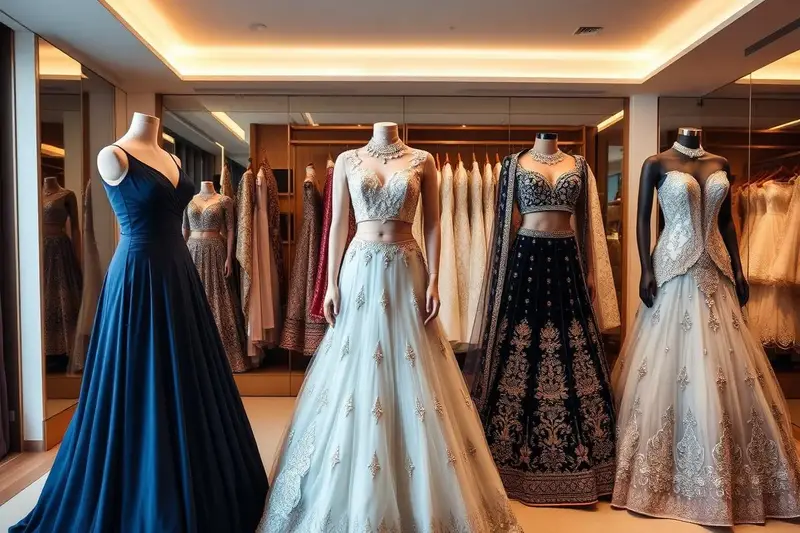
Choose a bridal lehenga in this order: silhouette, fabric weight, colour, embroidery, then fittings. The silhouette decides how you move and photograph, fabric weight decides whether you can wear it for the length of the ceremony, and embroidery decides how much jewellery the look can carry. Allow time for at least two fitting rounds before the wedding.
Key Takeaways
- Decide the silhouette before falling for embroidery - it is the hardest thing to change later.
- Weight matters as much as design for a ceremony that runs several hours.
- Colour choices differ by community and by ceremony; ask your family before assuming.
- Ready-stock and made-to-order lehengas have very different timelines.
- Book fittings with the actual blouse, petticoat and footwear you plan to wear.
Step 1: Silhouette
| Silhouette | How it behaves | Suits |
|---|---|---|
| A-line | Flares gently from the waist, easy to walk in | Most frames, long ceremonies |
| Circular / flared | Maximum flare and twirl, heaviest | Sangeet, dramatic photographs |
| Mermaid / fishtail | Fitted to the knee, then flares | Formal, still ceremonies |
| Panelled | Structured panels, less bulk than a full circle | Photograph-friendly with less weight |
| Straight / paneled sharara | Minimal flare, lighter | Daytime and intimate ceremonies |
If you will be sitting cross-legged for rituals, or climbing steps, or dancing, say so at the trial - the answer usually shifts toward A-line or panelled.
Step 2: Fabric and Weight
Raw silk and Banarasi hold structure and read as traditional; velvet is dramatic but the heaviest, and better suited to cooler months; georgette and crepe fall softly and weigh less; net and organza give volume without much weight but need lining. Ask what the finished garment will weigh, not just what the fabric is - lining, cancan and embroidery add most of it.
For an outdoor daytime ceremony in a warm month, a lighter weave with embroidery concentrated at the hem is usually more wearable than an all-over heavy piece.
Step 3: Colour
Red and other traditional jewel tones remain the expected choice for the main ceremony in many communities, but this varies: some families expect a specific colour, some prefer ivory, gold or green, and many couples now choose deeper non-red shades. Ask about family expectations early, because it is the one constraint that cannot be resolved at a fitting.
Our guide to lehenga colours for Indian brides goes through colour families and how they behave in photographs.
Step 4: Embroidery and Jewellery Balance
Zardozi, gota patti, resham, mirror work and sequins all photograph differently. As a working rule from our styling team, the denser the embroidery, the fewer jewellery pieces the look needs - a heavily worked lehenga with a full layered set often reads cluttered in close-up photographs. Decide the jewellery scale at the same trial rather than afterwards.
Step 5: Fittings and Timelines
Ready-stock lehengas can often be altered in a shorter window. Made-to-order and custom pieces take considerably longer, and boutiques quote different lead times depending on handwork and season. Wedding outfits frequently need more than one fitting round, particularly tailored blouses. Bring the petticoat or cancan, the footwear and the dupatta to every fitting, since hem length is set by the shoes.
Our alteration guide sets out what each fitting round should achieve.
Step 6: The Dupatta Decision
Whether you want a single drape, a double drape or a cape changes what dupatta fabric you should buy - which is why it belongs in the lehenga decision rather than after it. Our dupatta draping guide covers which fabrics hold which drape.
Working With a Stylist
Most difficult lehenga decisions are trade-offs - drama against comfort, embroidery against jewellery, tradition against personal taste. Our bridal styling team works through those trade-offs at trials and fittings, and wedding shopping assistance handles the shortlisting and shop visits if you would rather not start from scratch.
Ready to start? Plan My Bridal Wardrobe and we'll work through silhouette, fabric and fittings with you.