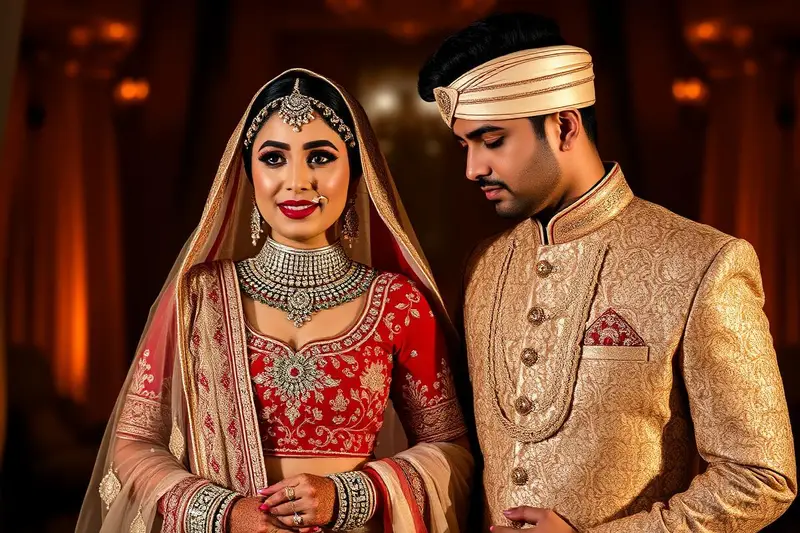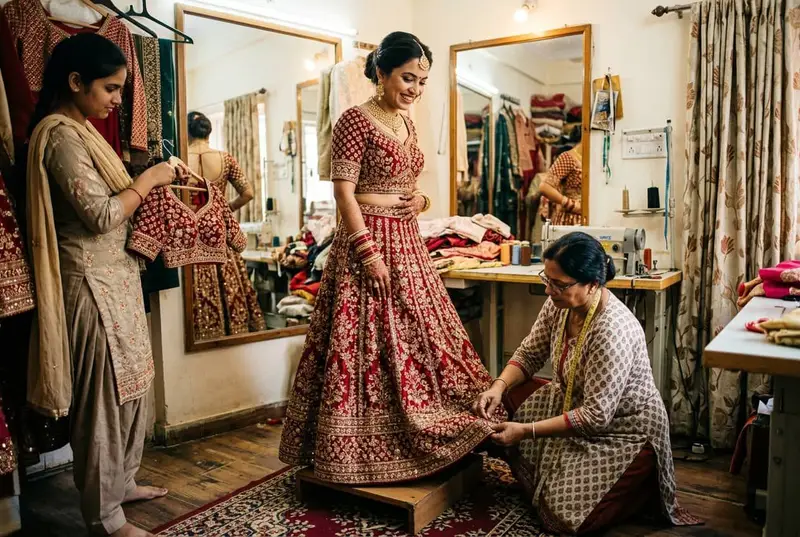
Wedding outfits often need one or more fitting rounds, particularly tailored blouses, sherwanis and made-to-measure pieces. Plan the first fitting once the garment is ready, a second to confirm the corrections, and keep the final one close enough to the wedding to reflect your current measurements. Bring the footwear, inner garments and jewellery to every round.
Key Takeaways
- Expect more than one fitting for tailored pieces; one round is rarely enough.
- Hem length depends on footwear, so bring the actual pair.
- Blouse fit is the most common problem and the most adjustable one.
- Some things cannot be altered much - heavily embroidered panels and overall flare.
- Alteration queues lengthen through the busy November-to-February season.
What Each Fitting Round Should Achieve
| Round | Purpose | What to bring |
|---|---|---|
| First | Check overall fit, mark hem, identify problem areas | Footwear, petticoat or cancan, inner garments |
| Second | Confirm corrections, refine blouse and waistband | Same, plus the dupatta or stole |
| Final | Sign off fit, comfort and movement | Full set including jewellery and hairstyle plan |
What Can Usually Be Altered
- Blouse fit at the bust, waist, armhole and sleeve
- Hem length on lehengas, sherwanis and trousers
- Waistband position and closure type
- Cancan volume, to make a skirt stand away more or less
- Adding internal hooks, loops and dupatta anchors
- Taking in the side seams of a jacket or bandhgala
What Is Harder or Not Practical
- Reducing overall flare on a finished, panelled skirt
- Cutting through dense embroidery or a worked border
- Substantially lengthening a garment with a finished hem
- Changing the neckline where embroidery follows the original line
- Restructuring a heavily lined or padded bodice
Ask about these limits before buying, not at the fitting. If a garment needs a change in one of these areas, it is usually cheaper to choose differently at purchase.
Practical Fitting Advice
- Fit at a similar time of day to your ceremony, since fit changes slightly through the day.
- Wear the inner garments you actually intend to wear; shapewear changes the fit noticeably.
- Sit, walk, climb a step and raise both arms before approving anything.
- Ask for hooks inside the shoulder seam if a heavy dupatta or stole will be draped there.
- Take a photograph at each round so changes can be compared.
- Confirm in writing when the garment will be ready, and who is doing the work.
> Stylist note: If you expect your measurements to change before the wedding, tell the tailor at the first fitting. Some blouses can be constructed with extra seam allowance for exactly this reason - it is much easier to plan for than to fix later.
Timing and Season
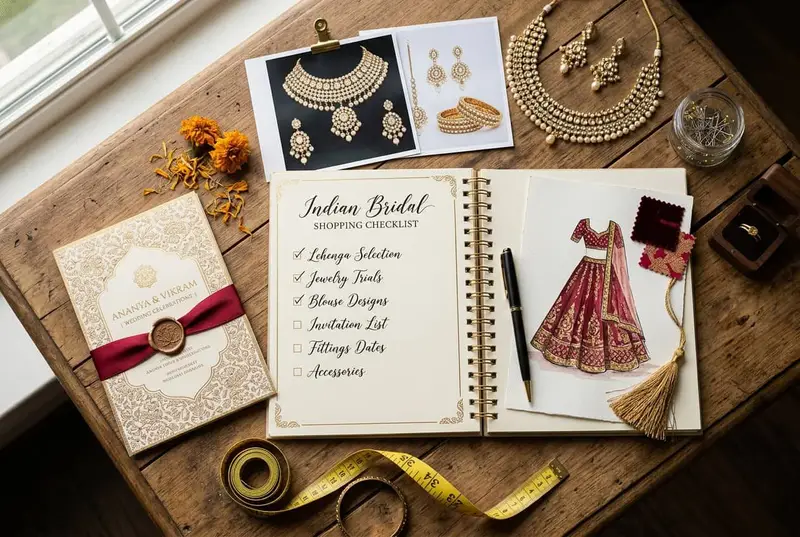
Boutiques and tailors quote different lead times depending on handwork and how busy they are, and queues lengthen through the peak wedding months. Book fitting appointments as soon as the garment is ordered rather than waiting until it arrives. Our wedding shopping checklist places alterations as the final stage of the buying sequence, and the bridal lehenga guide explains where fittings sit within the wider process.
Where We Help
Fittings are the stage where most wedding wardrobes are won or lost, and they are also the stage couples most often manage alone. Our wedding shopping assistance service tracks fittings and follow-ups across boutiques, and bridal styling attends fittings so fit decisions are made with the whole look in view.
Want fittings tracked and attended for you? Get My Wedding Shopping Plan.