Wedding shopping is easiest to control when it is organised by ceremony rather than by shop. List every function in your wedding, decide who needs an outfit for each one, and then buy in this order: main ceremony outfits first, then family and secondary functions, then jewellery, footwear and accessories, with alterations booked last. Most missed items are the small ones - petticoats, safas, spare dupattas and footwear.
Key Takeaways
- Build the list ceremony by ceremony, not shop by shop.
- Buy the main ceremony outfits first; every other colour decision follows from them.
- Accessories and footwear are what people forget, and they are what hold up final fittings.
- Leave a clear gap between the last purchase and the wedding for fitting rounds.
- One shared list for the whole family prevents duplicate and clashing purchases.
How Do You Start a Wedding Shopping List?
Write down the functions you are actually having. Many weddings include a roka or engagement, haldi, mehendi, sangeet, the main ceremony and a reception, but families combine or skip functions often, so build the list from your own schedule rather than a standard template.
For each function, note four things: who needs an outfit, the time of day, whether it is indoors or outdoors, and the expected level of formality. That single table decides fabric weight, colour and budget priority for the whole wedding.
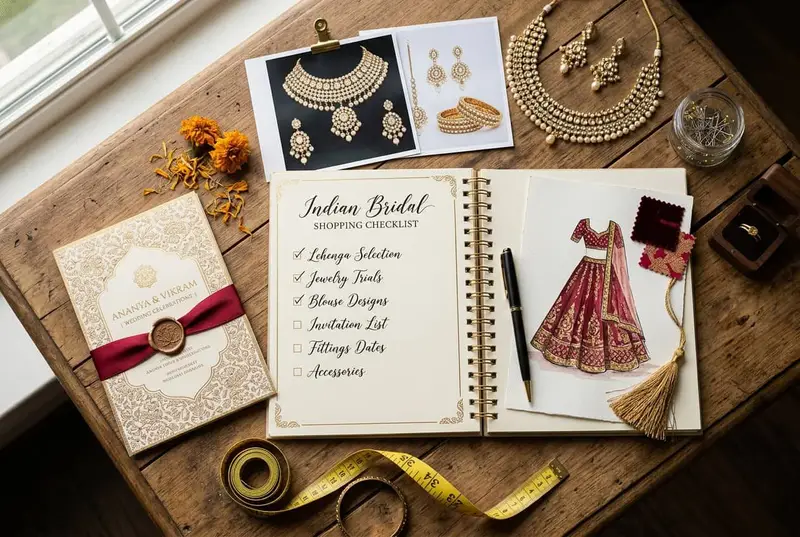
Ceremony-by-Ceremony Checklist
| Function | Bride | Groom | Often forgotten |
|---|---|---|---|
| Roka / engagement | Lighter lehenga or saree, statement earrings | Bandhgala or kurta set | Clutch, matching footwear |
| Haldi | Stain-tolerant cotton or cotton-silk outfit | Simple kurta | A change of clothes for afterwards |
| Mehendi | Light lehenga, sharara or suit | Printed kurta | Floral jewellery, hair accessories |
| Sangeet | Outfit you can move and dance in | Indo-western or structured jacket | Comfortable footwear, safety pins |
| Main ceremony | Lehenga or saree, dupatta, blouse, petticoat or cancan | Sherwani or dhoti-kurta, safa, stole | Petticoat, spare dupatta, hooks |
| Reception | Gown, saree or lighter lehenga | Suit, Jodhpuri or bandhgala | Second pair of shoes |
What Order Should You Buy In?
- Main ceremony outfits for the bride and groom. These take the longest, often need made-to-order work, and set the palette for everything else.
- Immediate family outfits. Parents and siblings, coordinated with the ceremony palette rather than matched to it.
- Secondary function outfits. Haldi, mehendi and sangeet, chosen for comfort and the time of day.
- Jewellery. After the outfits, so necklines and dupatta weight are already known. Our wedding jewellery buying guide covers buying versus renting.
- Footwear and accessories. Bought early enough to be worn in before the wedding.
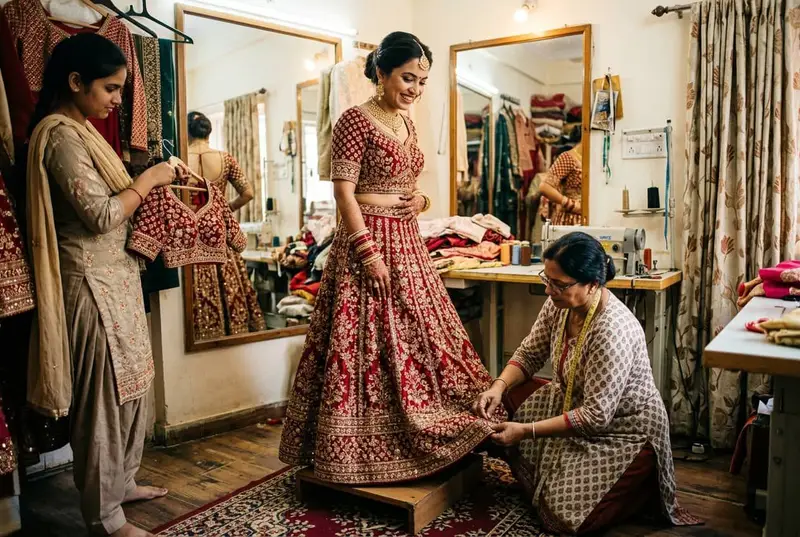
- Alterations and fittings. Booked as the final step, never squeezed into the last week - our alteration guide explains how many rounds to expect.
How Much Time Should You Allow?
Ready-stock garments can sometimes be bought and altered within a few weeks. Made-to-order and custom pieces - bridal lehengas, tailored blouses, sherwanis - usually need considerably longer, and boutiques quote different lead times depending on the season and the amount of handwork involved. Ask for a written delivery date at the time of ordering, and plan the rest of your shopping around the busy November-to-February wedding season, when tailors and boutiques are at their most stretched.
If you are working out sequence and dates in detail, our wedding shopping timeline sets out a month-by-month version of this list.
The Items Most Couples Forget
- Petticoats, cancans and shapewear that match the outfit's fall
- A second, lighter dupatta if you want a double drape
- Safa, kalgi and stole for the groom, often left until the last week
- Footwear for every function, not just the main ceremony
- Hooks, safety pins and a small repair kit for the wedding day
- Steaming and pressing before ceremony-wise packing
Where a Stylist Changes the Process
Most shopping stress comes from decisions being made out of order - jewellery bought before the outfit, or family outfits chosen before the bride's palette is set. Our wedding shopping assistance service builds the list, sequences the buying and handles fittings so the decisions happen in a workable order. If your wardrobe planning needs to come first, wedding wardrobe planning starts from the function list rather than from shops.
For the daytime functions specifically, our haldi outfit guide and engagement outfit guide cover what each event actually needs.
Want this turned into a plan for your own wedding? Get My Wedding Shopping Plan and we'll map the functions, cities and dates with you.