Work backwards from the wedding date. Start with the bride's and groom's main ceremony outfits, because made-to-order pieces carry the longest lead times, then family and secondary-function outfits, then jewellery, then footwear and accessories, and keep the final weeks free for fittings only. Lead times vary by boutique, season and amount of handwork, so confirm dates in writing.
Key Takeaways
- Sequence matters more than starting early: buying jewellery before the outfit creates rework.
- Made-to-order pieces need substantially longer than ready-stock garments.
- The last few weeks should hold fittings and finishing, not new purchases.
- The busy November-to-February wedding season stretches tailors and boutiques.
- One shared timeline across the family prevents clashes and duplicate buying.
A Working Timeline
| Stage | Focus | Why here |
|---|---|---|
| Earliest stage | Function list, palette direction, budget split | Every later decision depends on it |
| Early | Bride's and groom's main ceremony outfits | Longest lead times and custom work |
| Early-mid | Immediate family outfits | Coordinated to the ceremony palette |
| Mid | Secondary function outfits | Comfort and time-of-day driven |
| Mid-late | Jewellery | Chosen once necklines are fixed |
| Late | Footwear and accessories | Needs wearing in before the wedding |
| Final weeks | Fittings, alterations, steaming, packing | No new decisions |
Ready Stock vs Made to Order
A ready-stock garment can often be bought and altered within a few weeks. Made-to-order and fully custom pieces - bridal lehengas, tailored silk blouses, sherwanis with handwork - usually need considerably longer, and boutiques quote different timelines depending on the season and the embroidery involved. Always get a written delivery date at the time of ordering, and ask what happens if it slips.
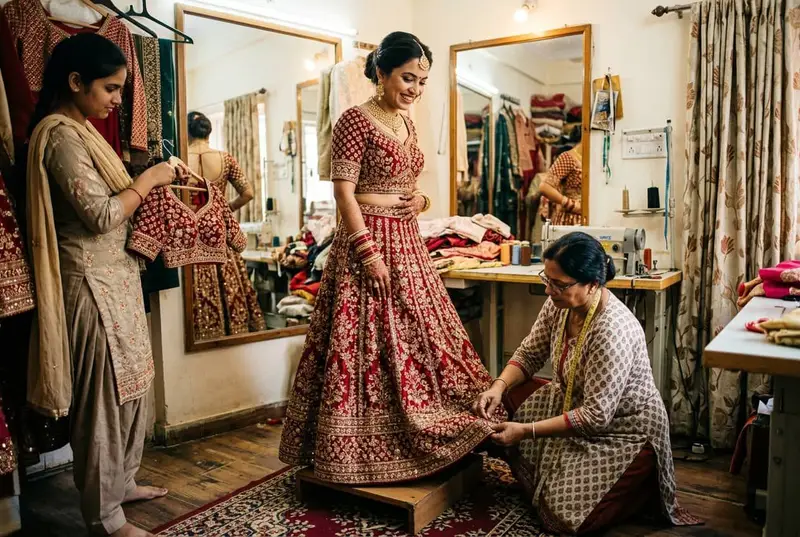
Wedding outfits often need one or more fitting rounds, particularly tailored blouses, sherwanis and made-to-measure pieces. Build those rounds into the timeline rather than hoping one fitting will do.
Ordering Logic That Avoids Rework
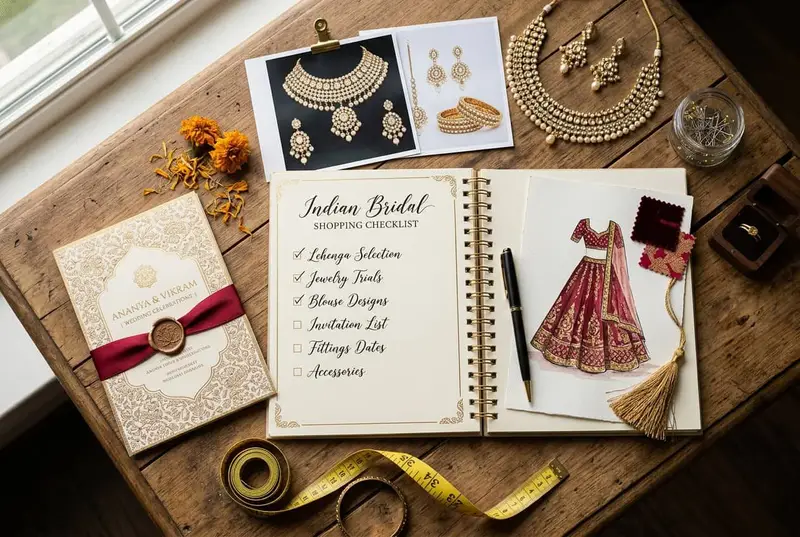
- Fix the function list and who needs outfits for each - our wedding shopping checklist gives the item-level version.
- Buy the bride's and groom's main ceremony outfits and lock the palette.
- Coordinate family outfits to that palette without matching it.
- Choose jewellery after the outfits, using the neckline and dupatta weight - see our jewellery buying guide.
- Buy footwear early enough to break in, then accessories to finish each look.
- Book alterations last, with buffer - our alteration guide explains what to expect.
Season and City Considerations
Peak wedding months put pressure on tailoring capacity, delivery slots and appointment availability. Some designer boutiques work by appointment, so checking before you travel can save time. If your shopping spans more than one city, plan the trip around the pieces that genuinely need to be bought locally rather than around a general market tour.
If Family Is Travelling from Abroad
Overseas relatives usually have a fixed window in India. Do the research, shortlisting and appointment booking before they land, and reserve their days for fittings and decisions that need to be made in person. Our NRI wedding shopping service is built around that constraint, and our NRI planning guide covers the sequencing.
Where Support Helps
If the timeline is already tight, the fastest gain is usually sequencing rather than shopping faster. Our wedding shopping assistance service builds and runs the schedule, and wedding wardrobe planning sets the function-by-function wardrobe first.
Building the Timeline in Practice
Take the wedding date, mark the final two weeks as fittings-only, and then place each stage backwards from there. Give the bride's and groom's main outfits the largest block, because they carry both the longest production time and the most fitting rounds. Family outfits can run in parallel once the palette is set.
Keep one shared document with three columns - item, who it is for, and the date it must be finalised. That single list removes most of the duplicated buying and clashing colours that come from relatives shopping independently.
What Usually Delays a Wedding Wardrobe
- Palette decisions left open, so family shopping cannot start
- Jewellery chosen before the outfit, requiring swaps
- One fitting assumed where two or three are needed
- Footwear bought last, leaving no time to wear it in
- Peak-season delivery slots booked later than the boutique needed
- Relatives arriving from abroad without appointments already held
A Checklist for the Final Fortnight
- All alterations complete, with a final try-on of the full look
- Jewellery matched to each outfit and stored per function
- Footwear worn in, with insoles or grips added if needed
- Each look packed as a set: outfit, inner wear, dupatta, jewellery, footwear
- A repair kit with hooks, pins, tape and matching thread
- Steaming booked or arranged at the venue
Want a dated plan for your own wedding? Get My Wedding Shopping Plan.