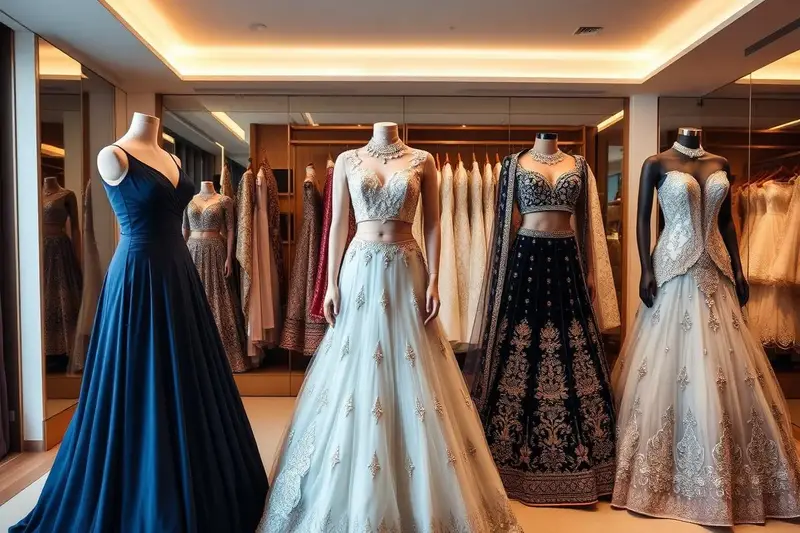
There is no single lehenga that is correct for a given body shape. What actually changes how a lehenga looks on you is where the waistband sits, how much flare the skirt carries, how the blouse is cut, and how the dupatta is draped. Adjusting those four variables at a trial is more useful than following fixed body-type rules.
Key Takeaways
- Waist placement and flare volume change proportion more than the "shape" label does.
- Try at least two silhouettes before deciding; photographs at the trial help more than mirrors.
- Blouse cut and sleeve length are easy adjustments with a large visual effect.
- Dupatta drape width can visually lengthen or shorten the torso.
- Comfort across a long ceremony should override any styling rule.
What Actually Affects How a Lehenga Looks
| Variable | What changing it does |
|---|---|
| Waistband height | A higher waistband lengthens the leg line; a lower one shortens it |
| Flare volume | More flare adds visual width at the hem; less flare reads sleeker |
| Cancan and lining | Controls how much the skirt stands away from the body |
| Blouse length and neckline | Alters where the eye lands on the torso |
| Sleeve length | Changes how structured or soft the upper body reads |
| Dupatta drape width | Narrow pleats lengthen the torso, wide fans broaden it |
A Practical Trial Framework
- Try one A-line and one flared or panelled lehenga in a similar colour, so you are comparing shape and not embroidery.
- Ask for the waistband to be pinned higher and lower and look at the difference.
- Photograph yourself standing, seated and mid-turn, in the shop's lighting and near a window.
- Try the dupatta in both a narrow side drape and a wider drape.
- Note which version you still like in the photographs the next day.
What Our Stylists Usually Suggest
These are starting points for a trial, not rules, and they change with fabric and height:
- If you want a longer leg line, a higher waistband with a slightly narrower flare usually helps.
- If you want more definition at the waist, a belted dupatta or kamarbandh is a quicker fix than altering the skirt.
- If a heavy skirt feels overwhelming, panelled construction often gives similar drama with less bulk.
- If you prefer a softer upper body, three-quarter sleeves and a softer neckline usually read gentler than a strapless or heavily structured blouse.
- If you are petite, keeping embroidery scale proportionate matters more than reducing flare.
None of this needs to override what you actually want to wear. Plenty of brides choose the most dramatic option available and look wonderful in it.
Fabric Changes the Answer
The same silhouette behaves differently in raw silk, velvet, georgette and net. A flared georgette lehenga falls close to the body; the same flare in raw silk stands away from it. That is why judging a silhouette from a photograph of a different fabric is unreliable.
Our bridal lehenga guide covers fabric and silhouette in more detail, and the dupatta draping guide explains which fabrics hold which drape.
Fittings Do Most of the Work
Most of what makes a lehenga look right on the wedding day comes from fittings rather than the original purchase - blouse fit, hem length set against your actual footwear, and the waistband sitting where it was pinned. Our alteration guide covers what to expect from each round.
If you want someone in the trial room asking these questions with you, our bridal styling service does exactly that, and wedding shopping assistance shortlists silhouettes before you start visiting shops.
Want an honest second opinion at your trials? Plan My Bridal Wardrobe.