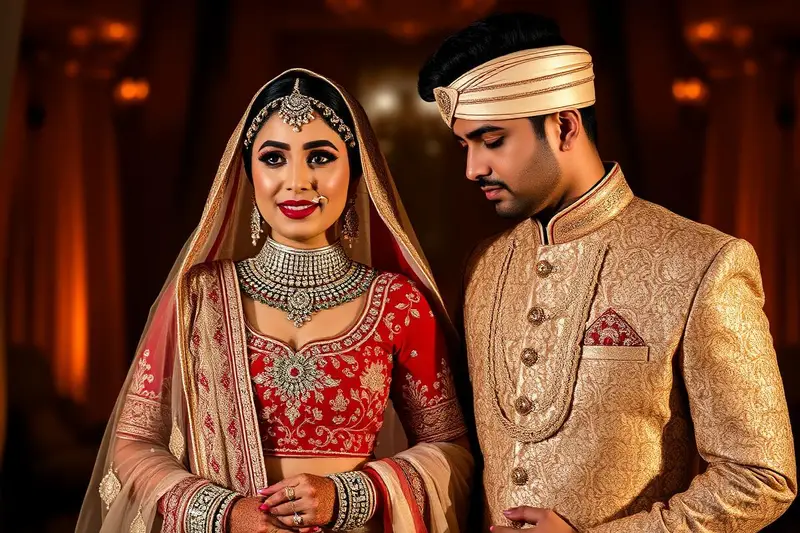
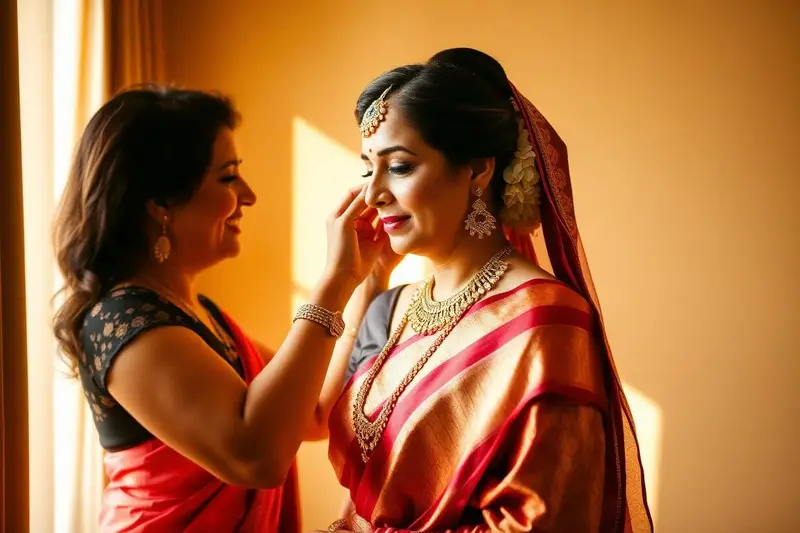
Indian bridal accessories fall into five groups: head (maang tikka, matha patti, passa), ears and neck (earrings, nath, necklaces), hands (chooda, kaleere, bangles, haath phool), waist (kamarbandh), and feet (payal, bichhiya, juttis). Which of these you need depends on your community's traditions and the function; a full set is usually reserved for the main ceremony.
Key Takeaways
- Accessories are usually the last thing bought and the first thing that goes wrong; put them on the shopping list with the outfit.
- Footwear should be bought early enough to break in and to set the lehenga's hem length.
- Weight matters: a heavy nath or matha patti worn for six hours is a different experience from a ten-minute trial.
- Not every tradition uses every piece - do not add items simply because they appear in bridal photographs.
- Keep a small day-of kit: spare pins, double-sided tape, a needle and thread, and blister plasters.
Head to Toe: What Each Piece Does
Head
- Maang tikka - worn at the hair parting; the single most photographed accessory after the necklace.
- Matha patti - a wider headpiece extending across the forehead, usually for the main ceremony.
- Passa or jhoomar - a side headpiece worn in Mughal-influenced looks and in many Muslim and Hyderabadi bridal traditions, though it is not universal.
- Sheeshphool - covers the parting from crown to forehead in some North Indian looks.
Ears and nose
- Chandbali, jhumka or chandelier earrings - scale them against the necklace, not against each other.
- Nath - the nose ring; regional forms differ widely, including the distinctive Maharashtrian and Rajasthani styles. Many brides use a clip-on version for comfort.
Neck
Choker, rani haar, or a layered combination. The blouse neckline should be decided first.
Hands
- Chooda - red and ivory bangles worn by many Punjabi brides, traditionally for a period after the wedding.
- Kaleere - ornaments tied to the chooda in Punjabi ceremonies.
- Haath phool - hand harness linking ring and bracelet; best with simple sleeves.
- Bangles and kada - glass, gold or a mix depending on tradition.
Waist
- Kamarbandh - defines the waist and can hold a dupatta drape in place.
Feet
- Juttis, kolhapuris or heels - comfort should decide this; the hem is stitched to the footwear height.
- Payal and bichhiya - anklets and toe rings, worn in many but not all traditions.
Which Accessories for Which Function?
| Function | Typical accessories |
|---|---|
| Haldi | Minimal - flowers, light bangles, flat sandals |
| Mehendi | Floral jewellery, light earrings, comfortable flats |
| Sangeet | Statement earrings, kamarbandh, block heels or juttis |
| Wedding ceremony | Full set as the tradition requires |
| Reception | One statement piece, simpler everything else |
The Accessory Shopping Checklist
- Footwear - buy first, break in, then fix the lehenga hem.
- Necklace and earrings - after the blouse neckline is finalised.
- Maang tikka or matha patti - tried with the actual hairstyle.
- Bangles, chooda and kaleere - as per tradition, ordered early in the wedding season.
- Kamarbandh - only if the drape or silhouette suits it.
- Potli bag - to hold phone, lipstick, pins and cash on the day.
- Payal and bichhiya - light enough to wear for hours.
- Spare kit - pins, tape, thread, plasters, and a second pair of flats.
> Stylist tip: Wear the full set together once, at home, for at least an hour. That is when weight, pinching earrings and slipping tikkas show up - not in a five-minute shop trial.
Comfort Is a Styling Decision
Heavy jewellery is worn for long stretches while sitting on the floor, standing for photographs and eating. Brides frequently switch to a lighter tikka after the rituals, keep a second pair of flats behind the stage, and use clip-on naths. None of this compromises the look; it just means the look survives the day.
Planning Accessories With the Outfit
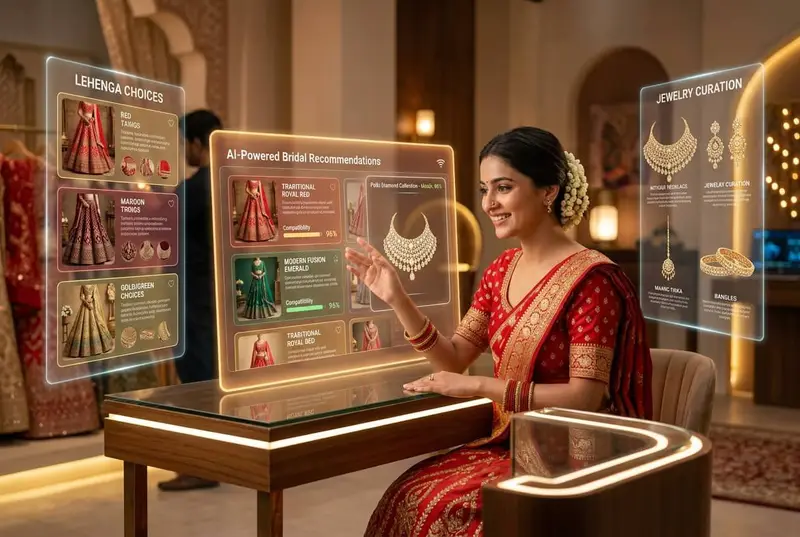
Accessories work best when planned alongside the outfit rather than after it - which is how our bridal styling team sequences fittings. For the jewellery side specifically, see bridal jewellery to match your lehenga; for the dupatta, bridal dupatta draping styles. If the shopping itself is the problem, wedding shopping assistance covers accessories in the same trip as the main outfits. Footwear belongs in the same plan - see the bridal footwear guide.
For the wedding party, our bridesmaid styling guide keeps jewellery scale consistent across the group.
Want a stylist to build the accessory list around your functions? Plan My Bridal Wardrobe.