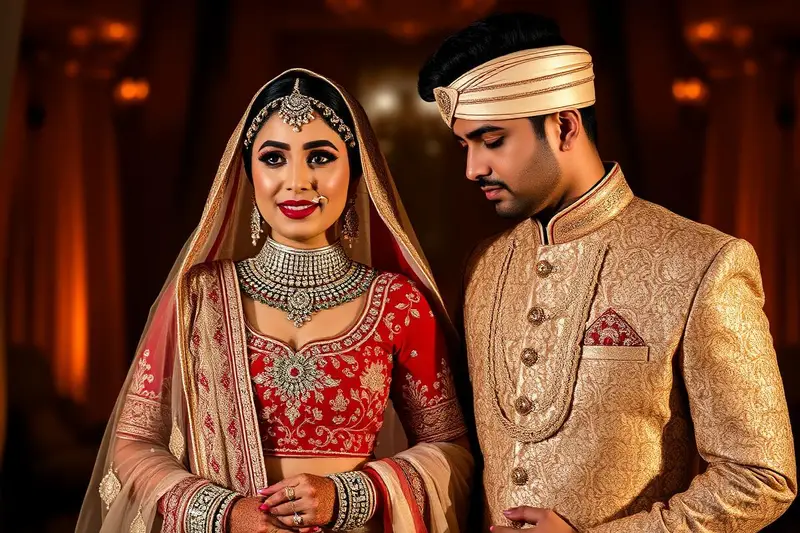
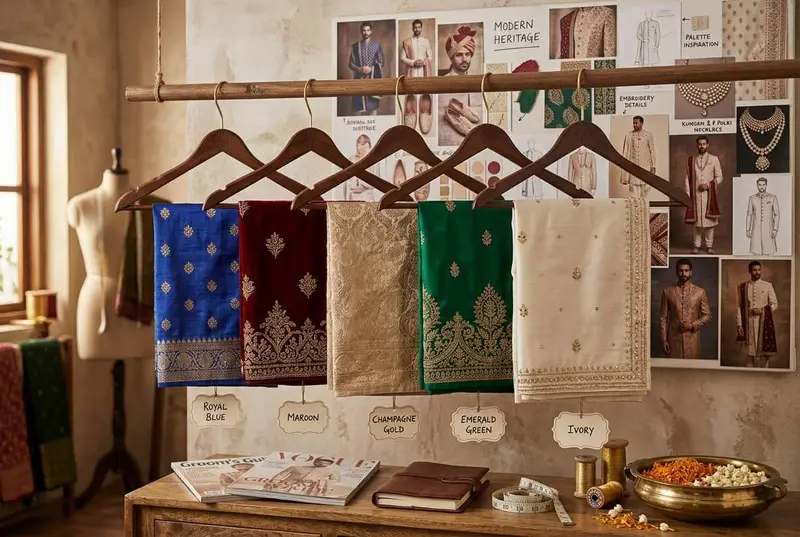
Coordinate bridal makeup by matching intensity to the outfit rather than colour to colour. A heavily worked, bright lehenga usually pairs with a defined but restrained face; a pastel or minimal outfit can carry a bolder lip or eye. Then adjust for venue lighting - daylight functions need lighter coverage, evening and stage lighting need more definition to avoid looking washed out.
Key Takeaways
- Decide the outfit first; makeup follows the outfit and jewellery, not the other way round.
- Balance intensity: one focal point - eyes or lips - reads better in photographs than both.
- Photograph every trial in daylight and in artificial light before deciding.
- Book the trial before final fittings so the whole look can be judged together.
- Tell your artist the venue, timing and photography style, not just the outfit colour.
Matching Makeup Intensity to the Outfit
| Outfit | Makeup direction that usually works |
|---|---|
| Bright red or maroon, heavy work | Defined eyes, neutral-to-berry lip, controlled shimmer |
| Pastels | Softer eyes, rose or coral lip, dewy finish |
| Ivory or champagne | Warm bronze eyes, nude-pink lip, luminous skin |
| Bottle green or emerald | Bronze or gold eyes, warm brown or brick lip |
| Deep wine or plum | Smoky neutral eyes, plum-toned lip |
| Kanjivaram or South Indian silk | Classic defined eyes, strong kajal, red or brick lip |
Function-by-Function Looks
- Haldi: minimal - tinted moisturiser, waterproof mascara, a tinted balm. Heavy base is rarely worth it when turmeric is involved.
- Mehendi: light, fresh, daylight-appropriate; a soft coral or peach lip.
- Sangeet: the place for a bolder eye or a metallic finish; make sure it survives dancing.
- Wedding ceremony: the most defined look of the wedding, built to hold for many hours and to photograph under both daylight and flash.
- Reception: sleeker and more contemporary - a stronger lip with a simpler eye is a common choice.
Getting the Trial Right
- Book the trial after the outfit is finalised and before the final fitting.
- Take the actual jewellery, or clear photographs of it, to the trial.
- Ask for the trial at the same time of day as the function where possible.
- Photograph the finished trial in daylight, indoors and with flash.
- Give specific feedback - "lighter base", "less shimmer on the lid" - rather than general impressions.
- Confirm the timeline, the assistant's role and the touch-up plan for the day.
> Stylist tip: Look at the trial photographs a day later, not immediately. First reactions to your own makeup are rarely reliable, and the photographs are what you will keep.
Lighting Changes Everything
Daylight mandaps show texture, so heavy base and strong contouring can look mask-like. Evening and banquet lighting tends to flatten features, so slightly stronger definition usually holds up better. Flash photography also brightens the face, which is why a base chosen much lighter than your own tone can look off in photographs. Tell the artist the venue, the timing and the photography style, and let them adjust base and definition accordingly.
Skin Preparation
We are stylists, not skin professionals, so treat this as practical scheduling advice rather than medical guidance. A consistent routine settled well before the wedding is easier to work with than anything introduced late, and most brides we work with prefer to keep facials and treatments away from the final week so there is time to adjust if their skin reacts. For anything clinical, or for advice on products and ingredients, speak to a qualified dermatologist.
Putting the Whole Look Together
Makeup, jewellery and outfit are one decision made in three parts - see bridal jewellery to match your lehenga and the bridal accessory checklist for the other two. Our bridal styling team plans the looks function by function and briefs the makeup artist with the outfit, jewellery and lighting in view, so the trial starts from the right place.
For daylight shoots, our pre-wedding shoot outfit guide covers how looks read on camera.
Want the looks coordinated across every function? Plan My Bridal Wardrobe.