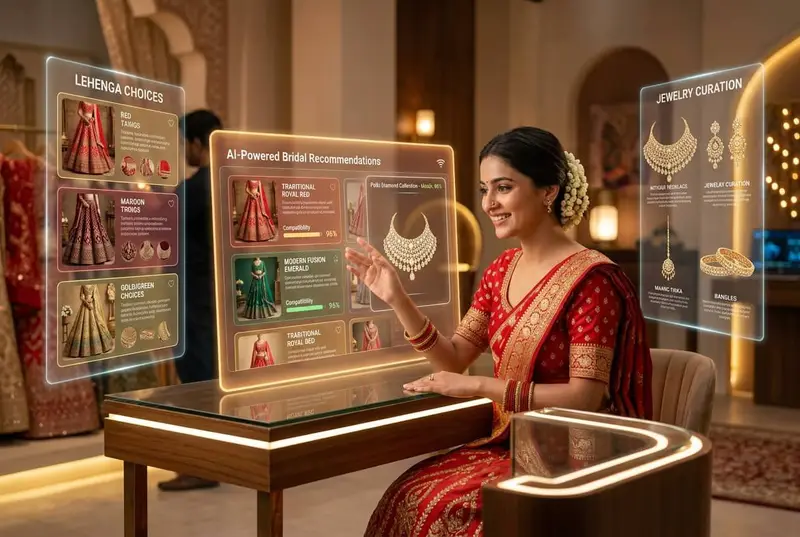
Virtual wedding styling replaces an in-person shopping trip with structured video calls, shared photos, and digital planning documents - covering outfit shortlisting, colour planning, and sequencing across ceremonies. It doesn't replace fittings or alterations, which still need a local tailor, but it can meaningfully cut down how much in-person time is needed before the wedding.
Key Takeaways
- A virtual session covers style profiling, recommendations, and colour planning - not physical fittings.
- Good photos (daylight, no filters) make a bigger difference to accuracy than most people expect.
- The shopping step itself can happen in person locally or through a video walk-through if you're not in the same city as the stores.
- Fit review can be done over video, but stitching and alterations always require a local tailor.
- Our online wedding stylist service is built specifically around this remote-to-local handoff.
What Virtual Wedding Styling Actually Is
If you can't visit a stylist's studio or a market in person - because you live abroad, you're working through the week, or your wedding is happening in a city you haven't moved to yet - virtual styling substitutes video calls, shared photos, and written documents for the in-person browsing trip. It works well for shortlisting and planning; it has real limits once you get to fabric texture and fit, which is worth knowing before you rely on it entirely.
What Happens During a Session
Step 1: A Discovery Conversation
The first call is about gathering information, not selling you anything. A stylist needs your wedding dates, venue type, the ceremonies you're having, a rough budget per outfit category, and any colours or silhouettes you already know you like or dislike.
Step 2: Building a Style Profile
Photos matter more here than a wardrobe visit would suggest:
- Full-length photos in daylight, from front and side, to assess proportions
- A close-up in natural light near a window, for skin tone and undertone
- Screenshots of Pinterest or Instagram saves, so the stylist can see your taste rather than guess it
- A list of ceremonies with dates, so outfits can be sequenced rather than chosen in isolation
Step 3: Recommendations, Delivered as Documents
Instead of walking a store aisle together, you receive a shortlist: designer names, product links where available, fabric notes, and a colour palette mapped to each function. A useful version of this document also flags which pieces need lead time for alteration, since a heavily embroidered lehenga can take several weeks to resize compared to a day or two for a plain silk saree.
Step 4: The Shopping Itself
This varies most by client location:
- If you're in the same city as the recommended stores, you shop in person using the shortlist as a guide
- If you're not, a video call walk-through - where someone at the store holds pieces up to the camera - can substitute for browsing, though it's slower
- NRI shopping support exists specifically for the second scenario, where someone local does the physical visit on your behalf
Step 5: Fittings and Final Adjustments
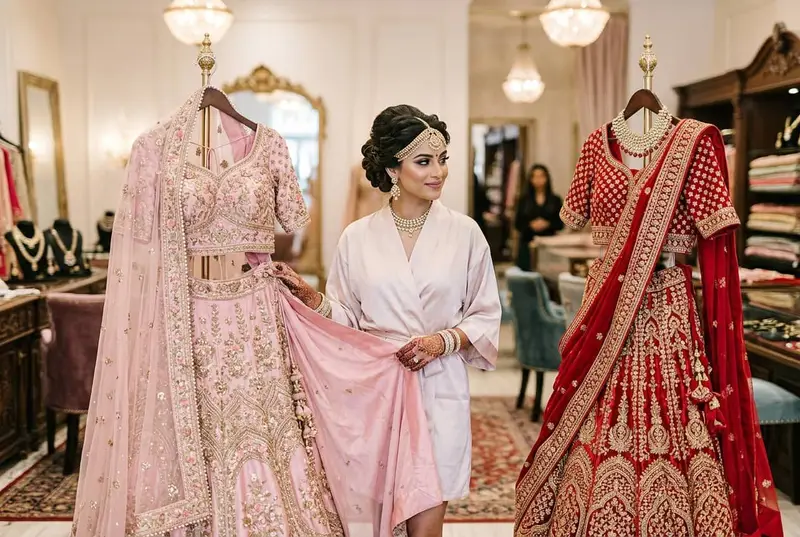
Virtual styling cannot replace a hands-on fitting. What it can do is review fit through video - checking blouse gape, lehenga fall, or sherwani shoulder fit against photos and video from the local tailor - and give instructions on what to alter. The actual pins, chalk, and stitching happen with a tailor near you.
Who Finds This Genuinely Useful
- Couples where the bride's and groom's families are shopping in different cities and need one point of coordination
- Anyone getting married in a city they don't currently live in, where a destination wedding means styling has to happen before travel
- People with limited weekday availability who can review shortlists at night rather than take a day off to shop
- NRI families where a video call session is realistically the only planning that happens before a short India trip
Where It Falls Short - and When In-Person Help Still Matters
Fabric texture, exact colour matching, and how heavy an outfit feels for a long ceremony are genuinely hard to judge over video. If your schedule allows even one in-person visit before the final purchase, it's worth using it for the bridal outfit specifically, since it's the piece worn longest and photographed the most. Similarly, a first physical fitting - rather than a purely video-reviewed one - catches issues a screen can miss.
Preparing for Your First Call
- Have your venue confirmed, even provisionally, since fabric weight and colour choices differ for an outdoor lawn wedding versus an air-conditioned hall
- Note every function you're having, not just the main ceremony, so nothing gets planned around only the wedding day
- Keep a rough per-category budget ready, even as a range
- Gather photos of any family heirloom jewellery in advance if you plan to build outfits around pieces you already own
Common Questions Couples Raise
"Will the colours look the same as they do on my screen?" Not always exactly, which is why cross-checking recommended shades against fabric swatches at the actual store is worth the extra step before a final purchase.
"What if my measurements change closer to the wedding?" This happens often enough that most tailors build in a buffer during the first fitting rather than cutting to exact measurements taken months in advance.
"Can virtual styling handle last-minute changes?" Reasonably well, since most coordination happens over messaging anyway - the harder constraint is always physical shopping and stitching time, not the styling advice itself.
If you're weighing how to combine remote planning with an in-person visit for your bridal shopping, our online wedding stylist page explains how the two are typically structured together, and our wedding shopping assistance service covers the in-person execution once your style plan is set.