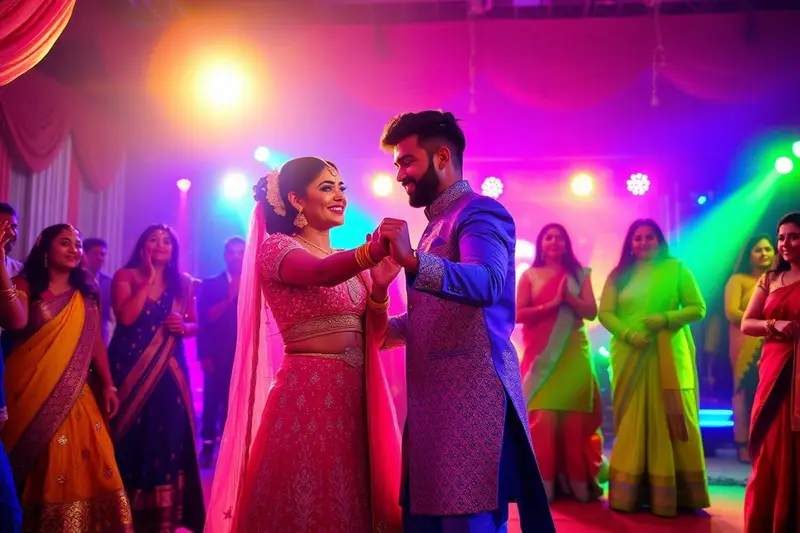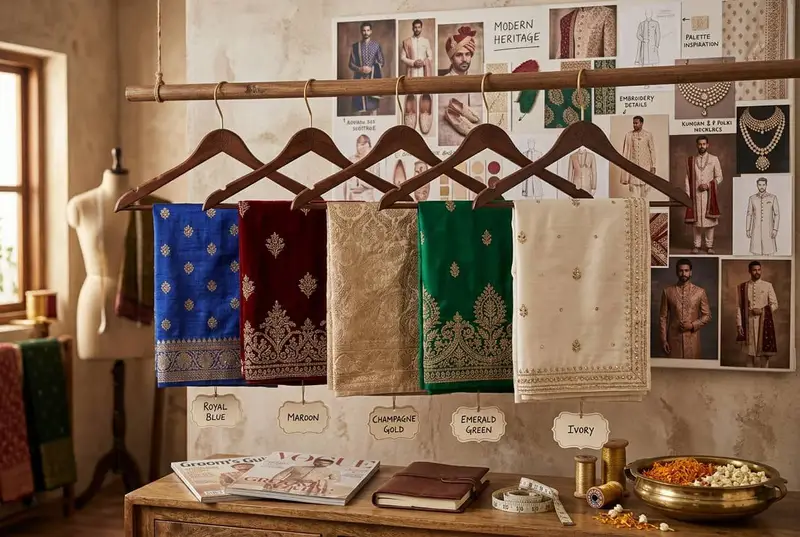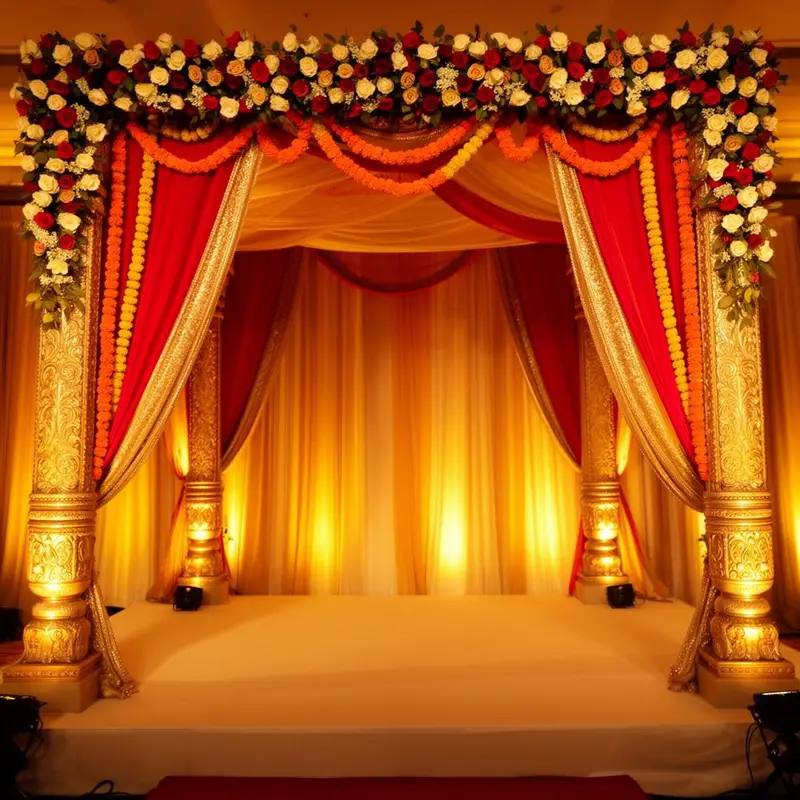
The main ceremony outfit has to do more work than any other look in the wedding: it is worn the longest, photographed the most and used during rituals that involve sitting, standing and moving. Choose it for weight and practicality as much as appearance, confirm any family expectations about colour and head covering early, and finalise fittings with the actual jewellery and footwear.
Key Takeaways
- The ceremony outfit is usually worn for the longest stretch of the wedding - weight matters.
- Rituals differ by community; ask what your ceremony physically involves.
- Head covering practice varies by family and ritual moment.
- Coordinate bride and groom through a shared palette rather than matching.
- The final fitting should include jewellery, footwear and the dupatta or stole.
What the Ceremony Outfit Has to Handle
Ask three questions before deciding: how long is the ceremony, is it indoors or outdoors, and what will you physically be doing? Ceremonies that involve sitting cross-legged, circling a fire, climbing steps or standing for extended blessings all favour different choices, and the answer is specific to your community's rituals rather than general.
| Ceremony condition | What usually works better |
|---|---|
| Long, seated rituals | Lighter fabric, less cancan, structured but not stiff |
| Outdoor daytime | Breathable weaves, embroidery concentrated at the hem |
| Evening indoor | Heavier silks and velvets read well under warm lighting |
| Rituals near a sacred fire | Fabrics and drapes that stay controlled; avoid loose trailing ends |
| Head covering expected | A lighter second dupatta for the head, heavier one at the shoulder |
Bridal Ceremony Outfit
Most brides choose a lehenga or a saree for the ceremony, and both work; the deciding factors are usually family tradition, comfort over several hours and how you want to move. If you are undecided, our saree versus lehenga guide sets the choice out directly.
Colour expectations differ. Red and other traditional jewel tones are the norm in many communities, while others expect ivory, gold, green or a specific regional weave. Confirm with your family before ordering. Our bridal lehenga guide covers silhouette and fabric, and the dupatta draping guide covers drapes that suit a head covering.
Groom Ceremony Outfit
A sherwani is the most common ceremony choice, with dhoti-kurta, veshti or a regional equivalent expected in several traditions. Headwear practice also varies - a safa or pagdi in many North Indian weddings, a turban as part of religious practice in Sikh weddings, other forms elsewhere. Ask, and arrange a tying trial in advance. Our groom accessories guide covers the safa, stole and footwear together.
Coordinating the Two Looks
The reliable approach is a shared palette with one repeated accent - the groom's stole picking up a colour from the bride's dupatta, for instance - rather than identical shades. Our couple coordination guide works through it in detail, and family coordination is covered in the family styling guide.
Fittings for the Main Day
- Bring the actual footwear to every fitting; the hem depends on it.
- Try the outfit with the full jewellery set and the intended hairstyle.
- Sit, stand and lift both arms before approving the fit.
- Ask for internal hooks to carry the weight of a heavy dupatta or stole.
- Keep the last fitting close enough to the wedding to reflect current measurements.
Getting the Main Day Right
The ceremony look is the one decision where comfort and tradition have to be balanced rather than traded off. Our bridal styling and groom styling teams plan the main-day look around your specific rituals and schedule, including drapes, fittings and getting-ready timing.
Earlier events have their own considerations - see our engagement outfit guide.
Planning your main ceremony looks? Plan My Wedding Looks and we'll work through the rituals, timings and fittings with you.