"Isn't a wedding stylist the same as a wedding planner?" is one of the first questions couples ask once they start hiring help, and the honest answer is no - the two roles rarely overlap in practice. Confusing them usually means one of two things happens: you pay a planner for outfit advice they're not trained to give, or you expect a stylist to manage your caterer and venue, which isn't their job either. Here's where the line actually sits.
What a Wedding Planner Handles
A wedding planner runs the overall event as a project manager would:
- Venue selection and booking - shortlisting, site visits, contract negotiation
- Vendor management - hiring and coordinating caterers, decorators, DJs, photographers
- Budget tracking - keeping every category's spend visible against the overall number
- Master timeline - building the schedule that every vendor works off on the actual day
- Guest logistics - RSVPs, seating charts, hotel room blocks for outstation guests
- Day-of coordination - making sure the schedule holds when things inevitably run late
If you think of your wedding as an event with dozens of moving parts, the planner is who keeps them moving in sync.
What a Wedding Stylist Handles
A wedding stylist focuses specifically on how the people at the wedding look and photograph:
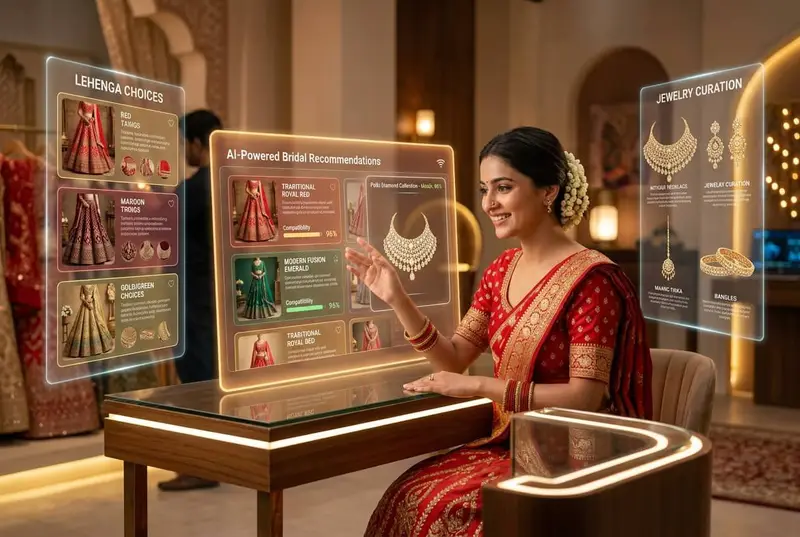
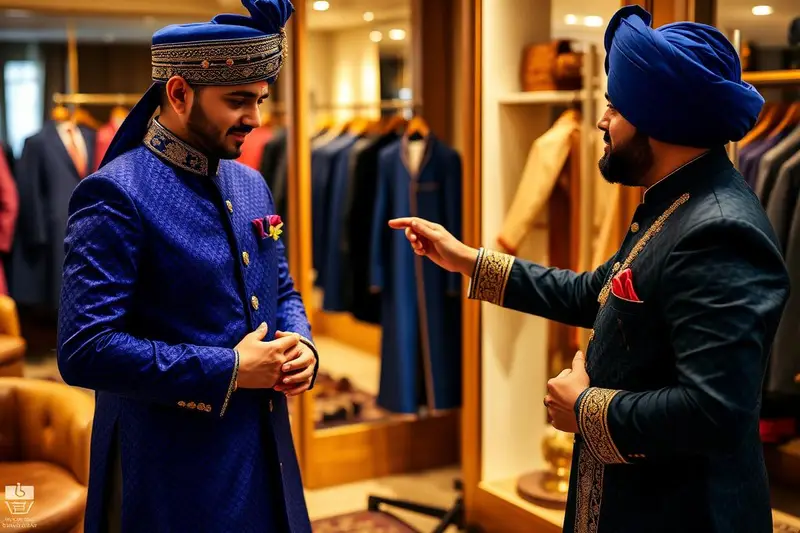
- Outfit selection across bridal, groom, and extended family wardrobes
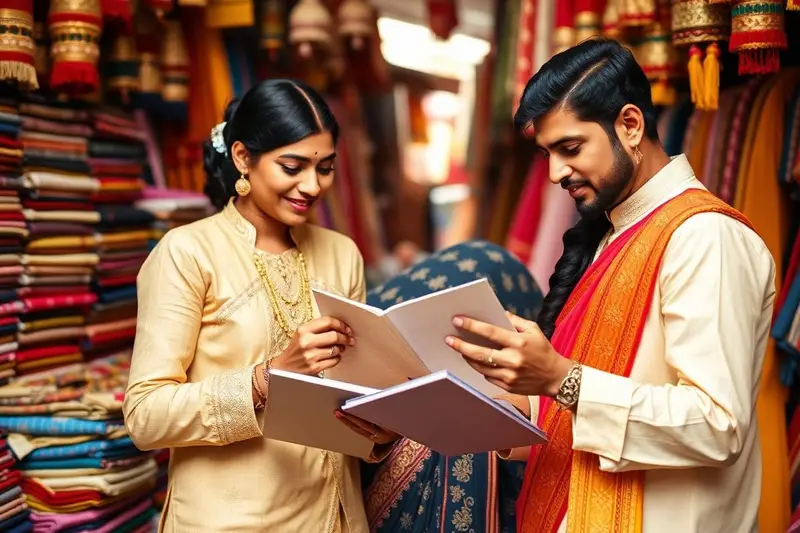
- Shopping accompaniment - going with you to markets and boutiques so decisions get made in real time rather than through endless photo-sharing
- Colour coordination - making sure the bride, groom, and immediate family don't clash on camera, without everyone looking identically matched either
- Jewelry pairing - choosing pieces sized and styled to the outfit and the specific ceremony, since bridal jewelry for a daytime pheras look and an evening reception look are rarely the same set
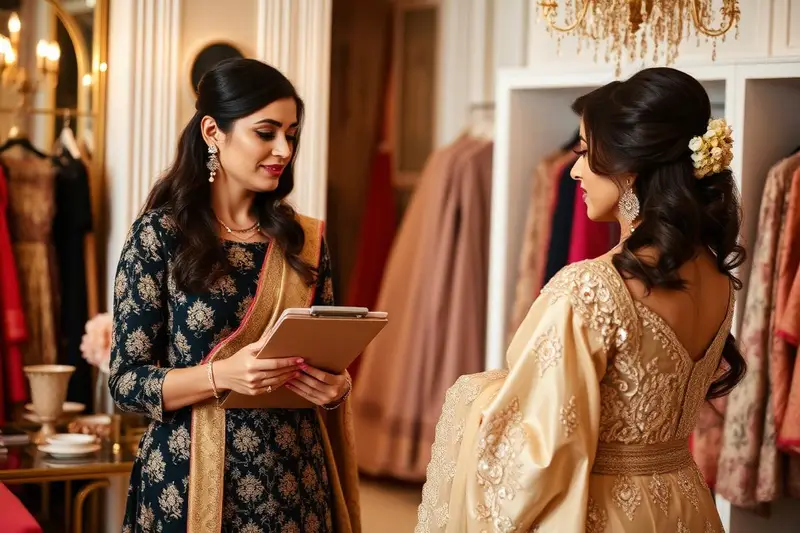
- Dupatta draping - getting the drape right for the specific silhouette and ceremony, which varies more than people expect between a lehenga, a saree, and an anarkali
- Makeup artist briefing - passing on outfit colour and neckline details so the MUA's look complements rather than competes with the outfit
Comparing the Two Roles
| Aspect | Wedding Planner | Wedding Stylist |
|---|---|---|
| Focus | Logistics and coordination | Fashion and aesthetics |
| Venue | Books and manages | Advises on how it photographs |
| Outfits | Not typically involved | Core responsibility |
| Budget | Manages the overall event budget | Manages the outfit and styling budget |
| Vendors handled | Venue, catering, decor, DJ | Boutiques, tailors, MUAs, jewelers |
| Day-of role | Runs the event schedule | Styles and dresses the couple |
When You Only Need a Stylist
- Your family is managing logistics themselves, as many Indian families still prefer to do
- You already have a venue and vendors booked but need help with outfits and shopping
- You're an NRI couple who mainly needs remote outfit sourcing rather than on-ground event management
- You want outfit coordination handled professionally without paying for full event planning
When You Only Need a Planner
- You already have a clear sense of your outfits and don't need shopping support
- Your event has complex logistics - multiple venues, large guest counts, tight vendor scheduling - that need dedicated management
- You're comfortable making styling decisions on your own
When You Genuinely Need Both
- A destination wedding, where venue logistics and outfit transport/fitting logistics both get complicated
- A large wedding (500+ guests) where family styling alone becomes a multi-week project
- Any wedding where you'd rather delegate both the budget-heavy logistics and the visual decisions than manage either yourself
Where the Two Roles Meet
Even though they're separate functions, a stylist's work still needs to sync with the planner's master timeline - a wardrobe plan for a three-day wedding has to slot into the same schedule the planner is running, particularly around outfit change windows between ceremony and reception.
Not sure whether you need a planner, a stylist, or both? Plan your wedding looks → and we'll help you figure out the right combination for your wedding.
A Practical Example of How the Roles Divide
Consider a three-day wedding with mehendi, sangeet, and the main ceremony plus reception. The planner is responsible for booking the venue for each event, confirming catering headcounts, coordinating the decorator's setup schedule between functions, and building the master day-of timeline that every vendor works from. The stylist, working within that same timeline, is responsible for deciding what the bride, groom, and immediate family wear to each of those four events, ensuring the sangeet's cocktail lehenga doesn't clash with the stage backdrop the decorator has planned, and being present (or reachable) on each day to handle draping and last-minute fixes.
What to Ask Before Hiring Either
For a planner: How many vendors do you typically manage directly versus subcontract? What's your fee structure - flat fee, percentage of budget, or per-service? Do you handle destination logistics if relevant?
For a stylist: Do you accompany clients to physical stores or work primarily through recommendations? How do you handle family members who want different budgets for their outfits? Can you brief my makeup artist directly, or do I need to relay information myself?
Avoiding Duplicate Work Between the Two
The most common friction point is when both professionals independently reach out to the same vendor - for instance, both a planner and stylist contacting the decorator about colour themes. Establishing early who owns which vendor relationship, even informally over a shared WhatsApp group, avoids mixed messages reaching the same vendor from two directions.