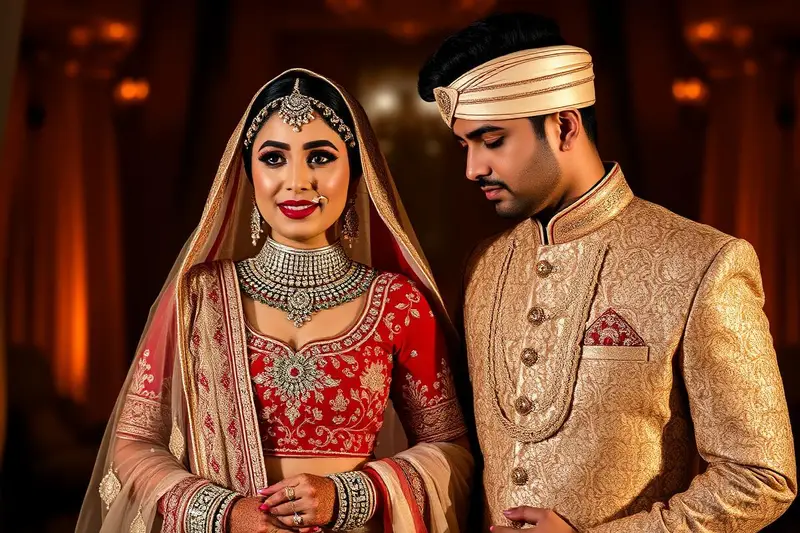
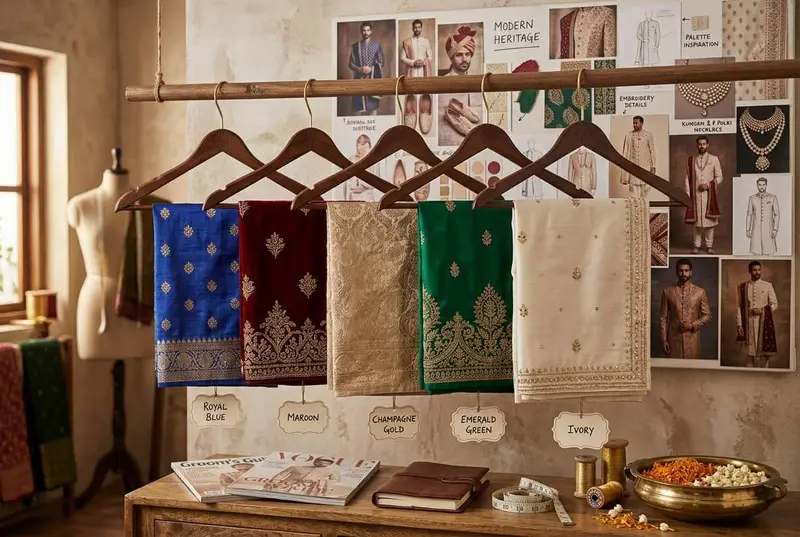
South Indian wedding dressing centres on handloom silk. Brides commonly wear a Kanjeevaram or other silk saree for the muhurtham, grooms a veshti with an angavastram or a silk kurta, and family members silk sarees or kurtas. Practices differ between Tamil, Telugu, Kannadiga, Malayali and other communities, and within families, so treat regional custom as a starting point.
Key Takeaways
- The main ceremony is usually early morning, which changes hair, makeup and draping timelines.
- Handloom silk quality and provenance can be verified before buying.
- Drape style, jewellery and colour associations vary by community, not by a single South Indian rule.
- Comfort during long seated rituals is a genuine constraint.
- Family outfits work best coordinated by palette and weave weight.
The Muhurtham Saree
For the main ceremony many brides wear a heavy handloom silk saree - Kanjeevaram is the best known, with Gadwal, Dharmavaram, Arani, Narayanpet, Molakalmuru and Kasavu (in Kerala) all traditional in their own regions.
Two practical checks before buying:
- Geographical Indication. Several Indian weaves, including Kanjeevaram, are GI-registered. Registrations are listed on the official GI registry.
- Silk authenticity. The Central Silk Board's Silk Mark label is a separate certification for pure silk; ask whether the piece carries it.
Our South Indian bridal saree buying guide goes into weave-by-weave detail, and our saree styling guide covers draping.
Function-by-Function Guidance
| Function | Bride | Groom | Note |
|---|---|---|---|
| Nichayathartham / engagement | Lighter silk or Kanjeevaram saree | Silk kurta or veshti set | Often at home or a small hall |
| Mehendi / sangeet (where held) | Light saree, lehenga or half-saree | Kurta or jacket set | Some families do not hold these |
| Muhurtham | Heavy handloom silk saree, temple jewellery | Veshti with angavastram, or silk kurta | Usually very early morning |
| Reception | Lighter saree, gown or lehenga | Suit, bandhgala or Jodhpuri | Most formal in the evening |
Depending on the ceremonies your family observes there may also be a nalangu, a kashi yatra or a sumangali prarthanai, each with its own dress expectations.
Drape, Blouse and Jewellery
Madisar, seedha pallu and nivi drapes are traditional in different communities and often specific to the ceremony rather than the whole wedding. Blouse fit is the single most common source of last-minute stress: tailored blouses in stiff silk usually need one or more fitting rounds, and neckline depth needs to be decided alongside the jewellery.
Temple jewellery, kasu malai, oddiyanam and jadai billai are traditional in many families. Choose these after the saree so the neckline and pallu weight are already fixed - our bridal jewellery combinations guide explains the sequence.
Dressing the Family
Coordinate by weave and palette rather than by identical colour: silk sarees in a related palette family, kurtas or veshtis at a matching formality level, and comfort accounted for during long morning rituals. Our family styling guide covers the method; family wedding styling handles it across households.
Practical Planning
- Muhurtham timings are often before sunrise; plan a realistic getting-ready sequence.
- Heavy silk needs steaming and careful pre-pleating; allow time the day before.
- Keep a spare blouse hook set and safety pins in the getting-ready room.
- If relatives are flying in, sequence fittings around their arrival.
For end-to-end sequencing, our wedding shopping assistance service plans the buying order, and cultural wedding styling works from your family's ceremony list.
Getting the Blouse Right
The blouse is where most South Indian bridal wardrobes run late. Heavy silk is unforgiving, so the fit has to be built rather than adjusted: decide the neckline depth alongside the jewellery, choose sleeve length for comfort during long rituals, and expect more than one fitting round. Where a maang tikka, oddiyanam or heavy necklace will sit, the blouse lining needs enough structure to carry the weight without pulling.
Keep one tested spare blouse if the wedding runs across several silk sarees - it saves a crisis on the morning.
A Simple Planning Order
- Confirm the ceremony list and the muhurtham timing.
- Buy the muhurtham saree first; everything else follows its palette.
- Book blouse tailoring immediately, with fitting rounds scheduled.
- Choose jewellery once the neckline and pallu weight are decided.
- Add the lighter function sarees and family outfits.
- Keep footwear, accessories and steaming for the final stretch.
Caring for Heavy Silk
Handloom silk needs to hang rather than sit folded for months, and it should be steamed rather than pressed directly. Store with a cotton cover instead of plastic, keep zari away from moisture, and refold along different lines occasionally so creases do not set into the same place. If the saree is travelling to another city, carry it flat in a cotton bag rather than compressed in a suitcase.
Planning a South Indian wedding wardrobe? Plan My Wedding Looks and we'll start from your ceremony list.