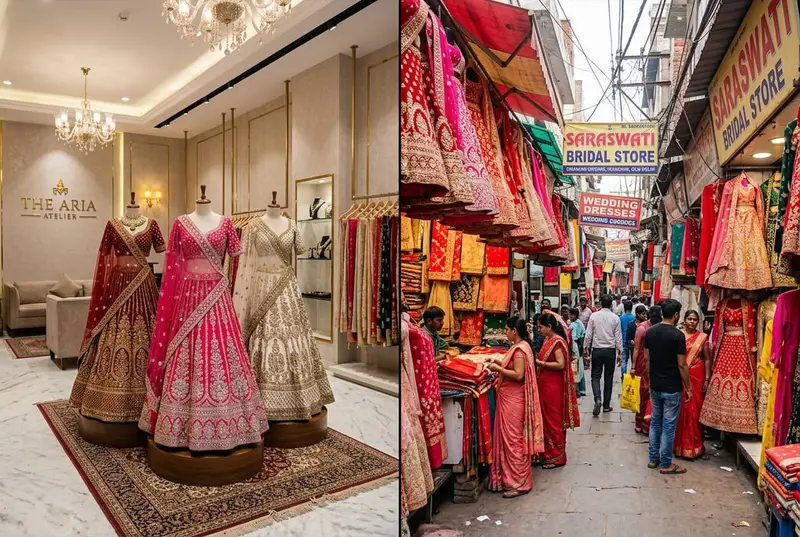
Designer boutiques and local bridal markets are not really competing for the same bride - they solve different problems. Designer studios give you consistency, fitting infrastructure, and a name that carries weight in photographs; local markets give you volume, speed, and negotiation room. The honest answer to "which is better" is that most well-dressed brides use both, just for different outfits in their wardrobe.
Designer Boutique Shopping
Advantages
- Premium fabrics: Access to finer silks, organzas, and hand-embroidered textiles sourced specifically for that label
- Controlled experience: Air-conditioned studios, one-on-one attention, and proper fitting sessions rather than standing in a crowded lane
- Consistency: What you see on the mannequin is close to what you'll get - finishing standards are tightly controlled
- Brand recognition: For couples prioritising how the outfit reads in photographs and press coverage, a known label carries weight
Disadvantages
- Price premium: Often 3-10x the cost of a similar-quality market outfit for comparable embroidery and fabric
- Lead time: 6-9 months for custom orders is standard; some designers take bookings more than a year out for peak wedding season dates
- Limited negotiation: Prices are largely fixed, with little room to move
- Design rigidity: Some designers won't modify their signature silhouettes to your preference
Local Market Shopping
Advantages
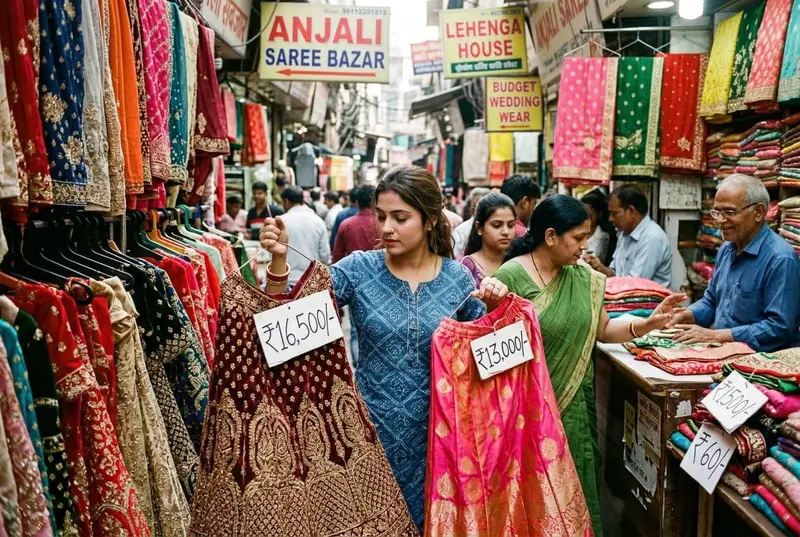
- Lower prices: Comparable craftsmanship at meaningfully lower cost, since you're paying the workshop directly rather than through a brand markup
- Sheer variety: Dozens of shops in a single market lane, so you can compare fabric and embroidery quality across many options in one visit
- Customisation freedom: Most local workshops will change colours, motifs, or necklines on request, something designer ateliers rarely do
- Faster turnaround: 2-4 weeks for a custom piece versus 6+ months at a design studio
- Room to negotiate: Quoted prices usually carry a margin, especially for combination purchases
Disadvantages
- Overwhelming choice: Too many options in one visit can cause decision fatigue rather than confidence
- Inconsistent quality: Not every shop on a market street delivers the same finishing standard, even within the same price bracket
- Extra alteration needed: Some pieces need additional tailoring work after purchase that a designer piece wouldn't
- No trial in some shops: A few stores don't allow you to try before buying, particularly during peak season rush
Well-Known Bridal Markets
- Chandni Chowk, Delhi - one of India's largest concentrations of bridal shops in one area
- Johari Bazaar, Jaipur - known for Rajasthani embroidery and jewellery under one roof
- Crawford Market, Mumbai - a mix of replicas and original designs
- Commercial Street, Bangalore - South Indian silks alongside contemporary lehengas
Side-by-Side Comparison
| Factor | Designer Boutique | Local Market |
|---|---|---|
| Lead time | 6-9 months, sometimes longer | 2-4 weeks |
| Price flexibility | Fixed | Negotiable |
| Customisation | Limited, depends on the label | High |
| Quality consistency | Reliable across the collection | Varies shop to shop |
| Fitting experience | Structured, in-studio | Depends on store |
The Hybrid Approach
A workable split for most weddings looks like this:
- Main ceremony outfit: Boutique or premium designer piece - this is the one that appears in your wedding album and family portraits for decades
- Pre-wedding functions: Local markets for mehendi, sangeet, and haldi looks, where trend-driven, one-time-wear pieces make more financial sense
- Groom's wear: Many local workshops deliver excellent sherwani quality at a fraction of designer pricing
- Family outfits: Local markets or ready-to-wear platforms - there's rarely a case for designer labels on family members' outfits
- Jewellery: Rent a designer-style set for the ceremony photographs, and buy simpler pieces for everyday wear afterward
How a Stylist Helps You Choose
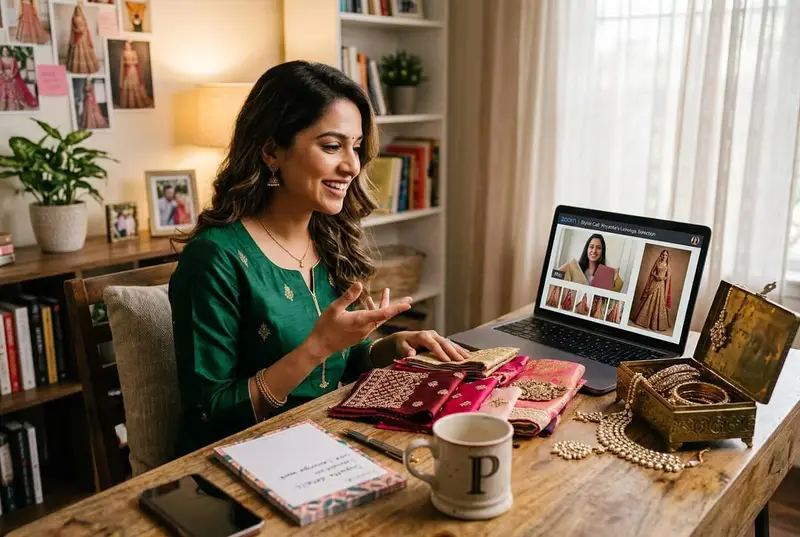
A wedding stylist is useful in this decision specifically because they've seen both ends of the spectrum up close - they can tell you where a market piece will genuinely match a designer's finishing and where it won't. They can also spot fabric or embroidery shortcuts before you pay, and help split your budget sensibly across ceremony versus pre-wedding outfits instead of overspending early and scrambling later. Our personal shopper service and shopping assistance team work across both designer studios and market vendors for exactly this reason.
What Actually Drives the Price Gap
It helps to understand where the money in a designer price tag actually goes, because it isn't purely fabric and embroidery. A significant share covers the studio overhead - flagship stores in expensive retail districts, in-house design teams, personalised fitting sessions, and the marketing and photography that builds the brand's visibility. A market workshop, by contrast, is usually a family-run karigar setup with far lower overhead, so a bigger share of what you pay goes directly into the materials and labour on your specific outfit. This doesn't make one option objectively "better" - it explains why two visually similar lehengas can be priced so differently, and why negotiating hard at a designer boutique rarely works the way it does in a market.
When Designer Genuinely Makes Sense
There are situations where the designer route is worth the premium beyond just brand name. If your outfit needs a very specific cut - a corseted bodice, a particular drape, or engineered embroidery that follows the body's lines exactly - an established design house has pattern-making expertise that most market tailors haven't specialised in. Destination weddings with international press coverage, or ceremonies where the outfit will be reused for a formal shoot months later, are also cases where the studio's after-sales support and consistent quality reduce risk.
Questions to Ask Before You Decide
- Does the outfit need to survive multiple wears (some brides re-wear reception lehengas for later events) or is it a one-time wear?
- How much lead time do you realistically have - custom designer orders are not an option inside 4 months
- Is there a specific silhouette only one label does well, or can a skilled local workshop replicate it from a reference photo?
- What's your comfort with negotiation - some buyers prefer fixed pricing even if it costs more
Want help deciding between designer and local for each of your outfits? Book a consultation with StyleBuddy Weddings.