Bridal Fashion

Wedding Footwear Guide for Indian Brides — From Juttis to Stilettos

📅 Mar 12, 2026🕐 8 min read

Your bridal outfit gets all the attention, but what's on your feet matters just as much. The right footwear affects your comfort, your posture, how your lehenga falls, and even how confidently you walk down the aisle. Yet most brides leave footwear as an afterthought — buying it a week before the wedding.

This guide covers every type of bridal footwear, which functions they're best for, and how to coordinate them with your outfit and bridal accessories.

Types of Bridal Footwear

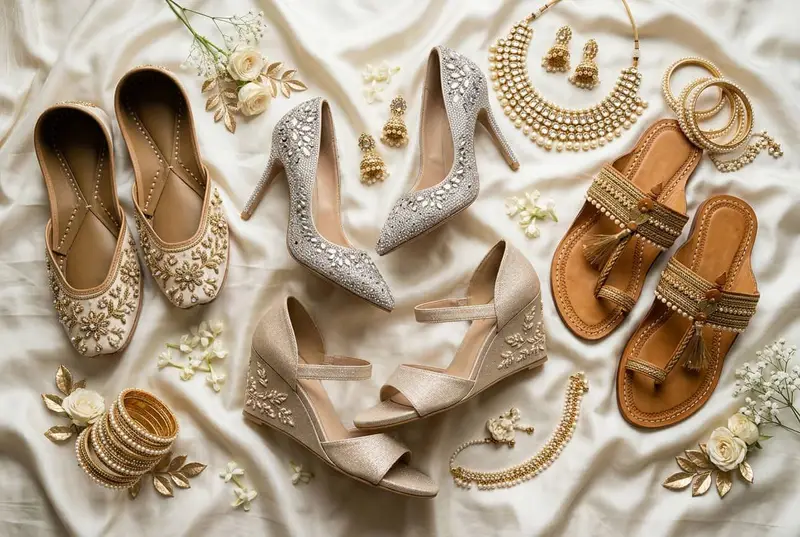
1. Embroidered Juttis (Mojaris)

> 💡 Pro Tip: Break in your wedding footwear by wearing them around the house for 30 minutes each day, a week before the wedding — this prevents blisters and ensures comfort on the big day.

The quintessential Indian bridal footwear. Juttis work beautifully with lehengas, sharara sets, and even sarees.

  • Best for: Wedding ceremony, mehendi, haldi
  • Comfort level: High — flat, no heel strain
  • Pairing tip: Match the embroidery colour to your dupatta border or blouse
  • Price range: ₹800–₹5,000 for handcrafted options
  • Pro tip: Break in your juttis 2-3 days before the wedding. New juttis can cause blisters if worn for the first time on your wedding day.

    2. Block Heels & Sandals

    Block heels offer height without sacrificing stability — perfect for brides who want to look taller but need to stand for hours during pheras or walk on uneven mandap surfaces.

  • Best for: Reception, engagement, sangeet
  • Ideal heel height: 2-3 inches for ceremonies, up to 4 inches for reception
  • Material: Metallic gold, rose gold, or colour-matched to your lehenga
  • 3. Wedge Sandals

    The comfort queen of bridal footwear. Wedges distribute weight evenly and are ideal for outdoor or destination weddings where you'll be on grass or sand.

  • Best for: Outdoor weddings, destination weddings, long ceremonies
  • Comfort level: Excellent — most stable heeled option
  • Style tip: Choose platform wedges with embellishment for a dressy look
  • 4. Kolhapuri Chappals

    A gorgeous traditional option, especially for Maharashtrian and South Indian brides. Modern kolhapuris come with rhinestones, zari work, and metallic finishes.

  • Best for: Mehendi, haldi, casual wedding functions
  • Pairing: Works beautifully with nauvari sarees, silk sarees, and casual lehengas
  • Footwear by Wedding Function

    Mehendi & Haldi

  • Go flat: Juttis or kolhapuris — you'll be sitting cross-legged
  • Slip-on style: Easy to remove when sitting on the floor
  • Avoid: Anything with ankle straps (hard to remove with wet mehendi)
  • Wedding Ceremony

  • Comfort first: You'll stand for 2-4 hours during pheras
  • Low block heels or juttis: Best options for stability
  • Lehenga length: Have your lehenga hemmed with your ceremony shoes on
  • Reception

  • Go glamorous: This is your chance for stilettos or statement heels
  • Height: Up to 4 inches is manageable for a 3-4 hour reception
  • Bring backup: Keep a pair of flats under the head table
  • Sangeet Night

  • Dance-friendly: Block heels, kitten heels, or embellished flats
  • Non-slip sole: Essential for dance floors
  • Test beforehand: Practice your choreography in your sangeet shoes
  • Payal & Footwear Coordination

    Your payal (anklets) and footwear should work together, not compete:

  • With juttis: Payal sits above the jutti — choose a payal with enough length
  • With heels: Payal should be snug enough not to slip under the heel strap
  • With open sandals: The payal becomes the star — choose a statement piece
  • Metal matching: Gold payal with gold-toned footwear, silver with silver
  • Shopping Tips

    Where to Buy

  • Juttis: Rajasthan (Jodhpur, Jaipur), Chandni Chowk Delhi, online artisan platforms
  • Designer heels: Fizzy Goblet, Needledust, Jimmy Choo (if budget allows)
  • Kolhapuris: Kolhapur city, Pune markets, or online ethnic stores
  • Budget-friendly: Local markets in your city — our wedding shopping assistance team can source options
  • > 🔍 Did You Know: Traditional Rajasthani mojris (juttis) are handcrafted using a single piece of leather — artisans in Jodhpur take 3-4 days to embroider a single pair with zardozi or threadwork.

    Sizing Tips

  • Buy half size up: Your feet swell during long events
  • Break them in: Wear around the house for 3-4 days before the wedding
  • Bring socks: If buying online, order your regular size plus half size up
  • Lehenga fitting: Always try your lehenga with the actual shoes you'll wear
  • Comfort Hacks

  • Gel insoles: Insert cushioned gel insoles in heels and juttis
  • Anti-blister balm: Apply on heels and toes before wearing
  • Backup flats: Keep embellished flats in your bridal emergency kit
  • Moleskin tape: Place on areas prone to rubbing
  • Breaking in: Wear shoes with thick socks at home to stretch them gently
  • FAQs

    Should I match my footwear to my lehenga colour exactly?

    Not necessarily. Metallic tones (gold, rose gold, champagne) work with almost every lehenga colour. If you want a colour match, go for a shade that complements rather than exactly matches — one shade lighter or darker creates a more sophisticated look.

    How many pairs of footwear do I need for my wedding?

    Most brides need 3-4 pairs: comfortable flats for mehendi/haldi, ceremony-appropriate juttis or low heels, glamorous heels for reception, and dance-friendly options for sangeet. Our wardrobe planning service includes footwear coordination.

    Can I wear stilettos with a heavy bridal lehenga?

    You can, but be cautious. Heavy lehengas already add weight and restrict movement. Block heels or kitten heels offer a better balance of height and stability. Save stilettos for the reception when you're in a lighter outfit.

    What if I'm taller than my groom — should I skip heels?

    Wear what makes you feel confident. Many modern couples embrace height differences. If it matters to you, kitten heels (1-1.5 inches) or embellished flats are gorgeous alternatives that add polish without significant height.

    When should I buy my wedding footwear?

    Buy 4-6 weeks before the wedding. This gives you time to break them in, get your lehenga hemmed to the right length, and exchange if needed. Our personal shopper service includes footwear sourcing.

    Ready to find your perfect bridal footwear? Book a free styling consultation with StyleBuddy Weddings →

    Read our complete bridal accessory guide or explore how to choose the perfect bridal lehenga.

    StyleBuddy Weddings is India's leading wedding styling service. From bridal styling and shopping assistance to virtual styling for NRI brides — we make wedding fashion effortless.

    ← Back to all posts

    You Might Also Enjoy