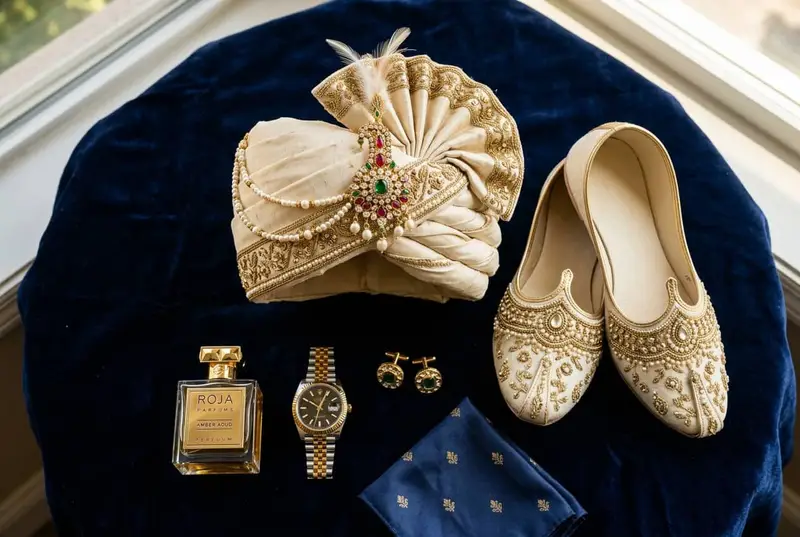
A groom's accessories usually come down to five decisions: headwear, the stole or dupatta, one piece of jewellery such as a brooch or kalgi, footwear, and a watch. Choose them after the main outfit, keep the metal tones consistent, and let one piece lead - usually the safa for the ceremony and the footwear or watch for the reception.
Key Takeaways
- Accessories are chosen after the outfit, so the embroidery and colour are already fixed.
- Keep metal tones consistent across brooch, buttons, watch and footwear.
- Headwear expectations differ by community and ceremony - ask the family rather than assuming.
- One statement piece is usually enough per look.
- Footwear and safa tying are the two things most often left too late.
Accessories by Function
| Function | Usually needed | Keep simple |
|---|---|---|
| Roka / engagement | Watch, pocket square, mojris | Skip headwear unless the family expects it |
| Mehendi | Light footwear, simple bracelet | Minimal jewellery in the heat |
| Sangeet | Watch, structured footwear | Brooch optional with a jacket |
| Main ceremony | Safa or turban, stole, brooch or kalgi, mojris | One statement piece only |
| Reception | Watch, cufflinks, formal shoes | Drop the traditional headwear |
Headwear: Safa, Pagdi and Turban
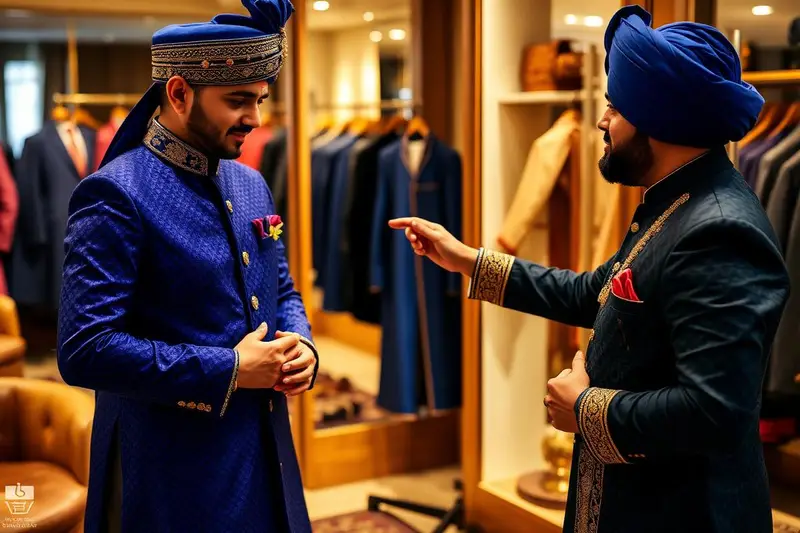
Headwear practice varies considerably. In many North Indian weddings a safa or pagdi is tied for the main ceremony; in Sikh weddings the groom's turban is part of daily religious practice rather than an accessory choice; and in several South Indian traditions headwear takes a different form or is not worn at all. The right question is what your own family and ceremony expect, not what is most commonly seen online.
Two practical points hold regardless: have the safa tied by someone experienced, and do a trial before the wedding day, because a poorly tied safa is uncomfortable and photographs badly. A kalgi and brooch are usually attached at that trial too.
Stoles and Dupattas
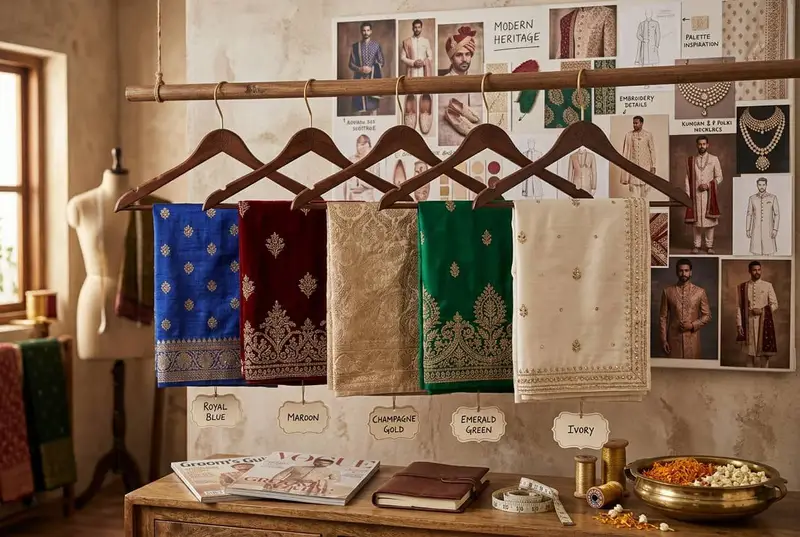
A stole should either pick up a colour already in the sherwani's embroidery or provide deliberate contrast - a near-match in a slightly different shade tends to look accidental. If it will be draped over one shoulder for hours, ask for a light hook inside the shoulder seam so it stays in place without repeated adjusting.
Jewellery, Watches and Small Details
- Brooch: the most common single statement piece for the ceremony; scale it to the sherwani's embroidery.
- Buttons: replacing plain buttons is an inexpensive way to lift a plain bandhgala.
- Watch: the accessory most grooms already own and will wear again; keep the metal consistent with the brooch.
- Cufflinks and pocket square: for reception suits rather than traditional wear.
- Mala or necklace: worn in some communities for specific rituals; follow family practice.
Footwear
Mojris and juttis suit traditional outfits; formal leather shoes suit reception suits. Wear either pair in before the wedding, since new mojris in particular rub across a long day. Keep the footwear tone in the same family as the safa and stole rather than introducing a third colour.
Our groom sherwani guide covers the outfit these accessories sit on, and groom outfit planning covers the full function-by-function wardrobe.
Getting the Coordination Right
Grooms' accessories are usually bought late and separately, which is how mismatched metals and last-minute safa problems happen. Our groom styling service plans accessories alongside the outfits, and wedding shopping assistance covers sourcing them in the same trip as the sherwani.
Want the whole groom wardrobe planned together? Plan My Groom Wardrobe.